
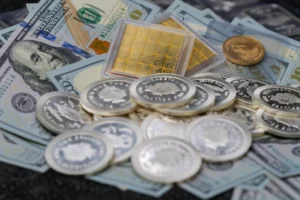
In 2026, gold and silver have reached unprecedented price levels, reflecting a growing sense of unease among investors about institutional independence and global stability. As political tensions escalate and confidence in traditional systems weakens, the precious metals market has surged, with gold hitting $4,630 per ounce and silver climbing to $86.24 before modest corrections. This extraordinary rally signals more than just speculative enthusiasm; it reflects a fundamental revaluation of tangible assets in an age of uncertainty.
Investors are increasingly treating gold and silver as both safe-haven assets and strategic hedges against inflation, currency volatility, and political interference. The following sections explore the key factors driving this rally, the role of institutional and geopolitical dynamics, and the potential direction of precious metals markets through 2026.
The Current Landscape of Precious Metals
The recent price surge in precious metals is not an isolated market event but a reflection of structural instability in the global financial system. Gold is currently trading near $4,594 per ounce, while silver hovers around $84.90. For several months, both gold and silver have maintained historically elevated ranges, indicating that sustained demand, not short-term speculation, is the root of the rally.
The silver market, in particular, has drawn increased attention due to the narrowing spread between spot and futures prices. This alignment indicates persistent physical demand, especially from industrial buyers in sectors such as renewable energy, electric vehicles, and advanced electronics. The underlying theme across both metals is clear: investors and manufacturers are seeking real, finite assets in an increasingly uncertain world economy.

The Backwardation Condition in Silver
A striking feature of the 2026 silver market is the emergence of a near-backwardation condition, where spot prices trade higher than futures contracts. This unusual pricing structure suggests strong immediate demand and limited available supply. Analysts who have long argued that paper-based silver instruments suppress real-world valuations now see this phenomenon as validation of their concerns.
Backwardation reflects both investor confidence in long-term scarcity and industrial users’ willingness to pay a premium for near-term delivery. As global demand for silver continues to rise due to green technologies and industrial production, this condition could persist, keeping prices up even if broader markets stabilise.
Institutional Uncertainty: The Federal Reserve Under Scrutiny
One of the strongest catalysts behind the recent rally is the ongoing controversy surrounding the Federal Reserve. Reports that Chairman Jerome Powell is under criminal investigation by the U.S. Department of Justice have shocked investors and raised serious questions about the central bank’s independence. Powell has described the probe as politically motivated harassment following his refusal to comply with pressure from the Trump administration to cut interest rates.
This situation has triggered a deeper concern: if political power begins to influence monetary decisions, the credibility of the Federal Reserve and, by extension, the U.S. dollar could be compromised. This uncertainty makes assets like gold and silver, which operate outside institutional control, more appealing to global investors.
Implications for Monetary Policy
The potential politicisation of monetary policy has far-reaching consequences. The dollar index, which fell 0.25 per cent to 98.82, reflects weakening confidence in U.S. governance and central bank autonomy. For investors, the perception of political interference in interest rate policy undermines faith in fiat currency stability.
As a result, capital is flowing into precious metals as a safeguard against the potential depreciation of paper currency. The lower interest rate environment further supports this trend by reducing the opportunity cost of holding non-yielding assets like gold. In essence, gold and silver have become insurance policies against institutional fragility, a role they have historically fulfilled during similar crises.
Geopolitical Tensions: A Catalyst for Precious Metals
Financial institutions are not the only ones experiencing political instability. Across global markets, multiple flashpoints are amplifying risk perceptions. Civil unrest in Iran has escalated, with hundreds reported dead and thousands detained. The Iranian government has warned both the United States and Israel against intervention following President Trump’s remarks suggesting possible military involvement.
This environment of rising geopolitical tension adds a risk premium to gold and silver valuations. Investors are once again turning to traditional safe-haven assets, seeking security in tangible stores of value. Historically, whenever political risk and economic uncertainty converge, the performance of precious metals strengthens significantly—and 2026 appears to follow that pattern closely.
The Role of Geopolitical Factors
Gold and silver have long acted as reliable hedges during global crises, and the current moment is no exception. Beyond Iran, conflicts and tensions in Eastern Europe and parts of Asia have further increased demand for assets uncorrelated with government debt or equity markets. Institutional investors, sovereign wealth funds, and even retail traders are reallocating capital toward bullion and precious metal ETFs.
This trend reflects not only fear but strategic foresight. With inflationary pressures still present and global trade strained, gold and silver are increasingly viewed as the last dependable forms of wealth preservation. Central banks across Asia and the Middle East have continued expanding their gold reserves, reinforcing the long-term bullish outlook for metals.
you can read here to learn more Tariff Impact on Forex: Global Trade Tensions Fuel 2026 Volatility
Market Volatility and Upcoming Economic Data
Market participants expect volatility to remain high in the coming months due to key economic releases and policy developments. The upcoming Consumer Price Index (CPI) and Producer Price Index (PPI) data will help determine the pace of inflation and guide market expectations for future rate decisions. These reports are likely to influence trading sentiment across commodity markets, including precious metals.
Adding to the uncertainty is the Supreme Court’s forthcoming ruling on the legality of U.S. tariff policies. If the decision undermines the current trade framework, the resulting policy shock could ripple through currency and commodity markets, further enhancing demand for gold and silver as defensive assets.
Anticipating Continued Volatility
Investors should brace for sustained turbulence in 2026. The interaction between institutional distrust, political instability, and macroeconomic uncertainty is creating a highly reactive market environment. Price swings in gold and silver may be frequent, but the long-term direction remains tilted upward.
For investors, this phase is less about speculation and more about preservation. Stress on global systems is making physical assets, which policy decisions cannot devalue, increasingly attractive. Many analysts believe the current rally marks the beginning of a broader, multi-year trend favouring tangible commodities over paper assets.
Factors Supporting the Precious Metals Rally
Several key dynamics continue to underpin the ongoing strength in gold and silver:
- Concerns Over Central Bank Independence: The investigation into Jerome Powell has intensified fears of political interference in monetary decisions.
- Falling Interest Rates: Declining yields make non-yielding assets such as gold and silver comparatively more appealing.
- Heightened Geopolitical Risk: Tensions across the Middle East, Europe, and Asia have accelerated the flight to safe-haven investments.
- Increased Institutional Participation: Central banks and large investment funds are expanding their precious metals holdings as part of broader diversification strategies.
- Industrial Demand for Silver: Expanding renewable energy and electronics industries continue to consume large quantities of silver, tightening supply further.
Each of these factors strengthens the fundamental case for continued appreciation in precious metals through 2026.
Record-Breaking Performance of Gold and Silver
The performance of gold and silver over recent months has been exceptional. Gold futures for February delivery reached a record Rs 141,250 per 10 grams on the Multi Commodity Exchange (MCX), while silver futures rose to an all-time high of Rs 263,996 per kilogram. Global markets have witnessed similar gains on the Comex exchange, where both metals have reached historical peaks.
Institutional demand continues to be a significant catalyst for these rallies. Exchange-traded funds (ETFs) have seen record inflows, while central banks continue to accumulate gold reserves. Both institutional and retail investors consistently participate, indicating that this rally is based on broad, fundamental support rather than speculative excess.
The Impact of Federal Reserve Pressure
Market experts attribute much of the current momentum in metals to concerns over the Federal Reserve’s independence. The ongoing investigation into Chairman Powell has cast doubt on the institution’s credibility, fuelling demand for safe-haven assets. This sentiment is further reinforced by the weakening dollar and the perception that political influence could distort future rate decisions.
As a result, traders and long-term investors alike are viewing gold and silver not just as hedges but as essential portfolio stabilisers in a climate where political decisions can rapidly reshape financial outcomes.
The Broader Economic Context
The broader macroeconomic landscape continues to favour precious metals. The dollar’s decline, rising global debt levels, and renewed trade disputes all contribute to a persistent demand for stable value assets. President Trump’s potential military escalation in the Middle East and ongoing unrest in Ukraine and Eastern Europe have intensified this cautious sentiment.
Global investors are shifting toward commodities with intrinsic value, and precious metals remain at the centre of that movement. Every major market correction in recent history has reinforced gold and silver’s role as enduring assets of confidence and preservation.
Conclusion
The extraordinary surge in gold and silver prices in 2026 reflects a global reawakening to the value of real assets amid rising uncertainty. The convergence of political tension, central bank scrutiny, and geopolitical instability has redefined how investors approach safety and risk.
As inflation persists and institutional confidence weakens, precious metals are regaining their status as both protection and opportunity. While volatility will remain a constant feature of the year ahead, the broader direction for gold and silver points toward sustained strength and a reminder that in uncertain times, tangible value endures.
Read here to learn more about Automated Investing : How Smart Tools Build Lasting Wealth

I’m Chaitali Sethi, a financial writer and market strategist focused on Forex trading, market behaviour, and trader psychology. I simplify complex market movements into clear, practical insights that help traders make better decisions and build a stronger trading mindset.