

As traders and investors prepare for 2026, markets across forex, equities, and commodities are entering a phase of renewed volatility and structural shifts. In this changing environment, strategies that reveal early momentum transitions before large-scale market reversals occur are gaining greater importance.
One concept drawing increasing attention among institutional and retail traders alike is the Change in State of Delivery (CISD).
The Change in State of Delivery (CISD) is a price action-based concept rooted in Smart Money Concepts (SMC) and advanced market structure analysis. It helps traders identify subtle transitions in market delivery when the flow of price changes from bullish to bearish, or vice versa, offering early insight into potential trend reversals or liquidity shifts. As traders adapt to algorithm-driven markets, mastering CISD can provide a practical edge in detecting shifts before traditional indicators confirm them.
Understanding Change in State of Delivery (CISD)
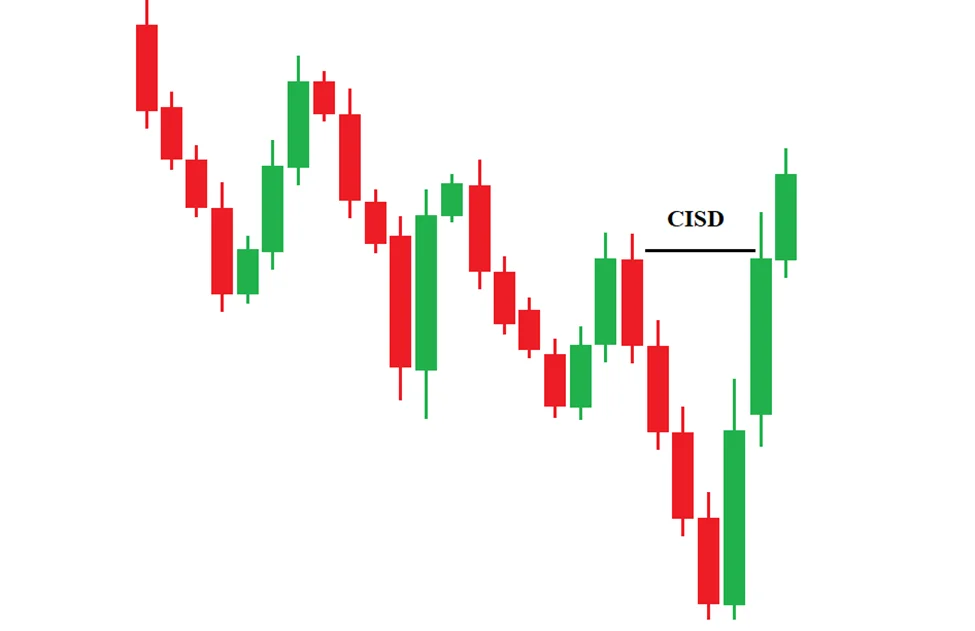
The Change in State of Delivery (CISD) describes a market event where price momentum shifts direction following a liquidity sweep or exhaustion of order flow. Unlike traditional reversal indicators that react after structure breaks, CISD focuses on the underlying delivery of price and how institutional order flow transitions between buyers and sellers.
When a CISD occurs, it suggests that the market’s prior momentum is weakening, and new participants are influencing price direction. This early recognition helps traders position themselves ahead of large structural changes.
For example:
- A bullish CISD occurs when the price closes above a key delivery level after a downtrend, suggesting buyers have absorbed selling pressure.
- A bearish CISD appears when price closes below a key delivery level after an uptrend, indicating distribution or fading buyer strength.
In both cases, CISD represents a subtle yet actionable signal of institutional behaviour in price action.

Core Drivers Behind CISD Signals
Understanding what causes a CISD helps traders recognise its context instead of treating it as an isolated signal.
1. Order Flow Transition
Markets move based on liquidity and institutional participation. A CISD typically forms when high-volume participants shift their delivery from accumulation to distribution (or vice versa), reflecting a redirection of capital flow.
This transition may occur after stop hunts, fair value gap fills, or market maker manipulations, making CISD a key component within Smart Money Concepts 2026 frameworks.
2. Liquidity Sweep and Absorption
CISD often follows a liquidity grab where price pierces a major high or low before reversing. The act of collecting liquidity before a reversal suggests the end of one delivery phase and the start of another, providing high-probability entry points.
3. Institutional Repricing
Large funds and institutions often shift delivery states as part of order rebalancing or hedging decisions. These transitions can occur around macro events such as rate announcements, CPI releases, or bond yield shifts, making CISD highly relevant in data-driven 2026 markets.
How Traders Apply CISD in Real Market Conditions
Applying the CISD trading strategy effectively requires combining technical precision with contextual awareness.
Here’s a practical framework for recognising and executing trades around CISD setups.
Step-by-Step CISD Trading Framework
- Identify Market Context
Start by determining whether the broader trend is bullish, bearish, or consolidating. Avoid trading CISD signals against dominant higher-timeframe momentum. - Mark Delivery Levels
Note the most recent significant swing highs and lows. These act as potential delivery boundaries where CISD formations often appear. - Wait for Liquidity Sweep
A genuine CISD often follows a liquidity hunt beyond a key level where retail traders’ stops are triggered before the price reverses direction. - Confirm the Change in Delivery
Look for a strong candle closing beyond the opposite side of the previous delivery zone. This confirms that control has shifted between buyers and sellers. - Align with Confluence Factors
Combine the CISD signal with order blocks, fair value gaps, or market structure shifts in forex to enhance reliability. - Manage Risk Proactively
CISD setups can fail in choppy markets. Use tight stop losses below liquidity points and target fair value zones or previous structure levels for exits.
This structured approach allows traders to adapt CISD concepts into a repeatable, rule-based strategy.
Scenario-Based Insights for 2026
Favourable Scenario: Institutional Momentum Alignment
In a favourable market environment characterised by strong institutional participation and clear directional trends, CISD signals align with macro momentum.
Such periods offer high-confidence setups, especially in major forex pairs, gold, and equity indices. Early identification of delivery shifts can lead to strong trend-following opportunities with minimal drawdowns.
Neutral Scenario: Range-Bound or Consolidating Markets
When markets lack directional conviction, CISD signals may appear frequently without meaningful follow-through.
In these cases, traders should prioritise confirmation through price action trading signals or structure validation, rather than acting on every CISD formation.
Risk-Driven Scenario: High Volatility and False Signals
During macroeconomic events, liquidity can distort price behaviour. False CISD signals may emerge when algorithms create temporary delivery shifts to absorb liquidity before resuming the original trend.
Risk management and confirmation from multiple timeframes become essential during these phases.

Common Mistakes Traders Make with CISD
Many traders misuse the Change in State of Delivery (CISD) due to lack of context, emotional decision-making, or overreliance on short-term signals. Understanding these pitfalls is vital for applying CISD effectively.
1. Ignoring Timeframe Context:
Traders often act on CISD signals from low timeframes without checking higher trends. A setup against the dominant direction usually leads to false reversals. Always align signals with broader market structure for confirmation.
2. Overtrading Low-Quality Signals:
CISD patterns in quiet or low-volume sessions often lack conviction. Frequent trades during these periods drain focus and capital. Wait for strong confluence and liquidity-based confirmation before entry.
3. Neglecting Risk Controls:
Treating CISD as a guaranteed reversal leads to poor money management. Each trade must include a clear invalidation level, stop loss, and defined target for disciplined execution.
4. Disregarding Fundamental Catalysts:
Ignoring macro events like rate decisions or inflation data can invalidate otherwise solid CISD setups. Always pair technical analysis with awareness of global drivers.
5. Using CISD in Isolation:
CISD works best with other Smart Money Concepts 2026 tools like order blocks, market structure shifts, or volume changes. Using it alone increases false signals.
Avoiding these mistakes allows traders to use CISD as a structured, context-aware strategy rather than a standalone trigger, improving long-term consistency and market adaptability.
Market View and Expert Consensus
Financial analysts describe the Change in State of Delivery (CISD) as a practical link between traditional technical analysis and institutional trading behaviour. It bridges how retail traders read charts with how large institutions manage liquidity and momentum in real markets.
Experts emphasise that CISD works best when it’s part of a broader Smart Money Concepts 2026 framework that also includes order block analysis, liquidity mapping, and momentum profiling. Using CISD alongside these tools provides a clearer view of market intent and reduces the risk of false signals.
Analysts also point out that while CISD helps identify early reversal zones, its reliability increases when traders confirm signals on multiple timeframes and consider market volatility. In essence, CISD is a precision-based tool designed to complement, not replace, a complete trading strategy.
Practical Checklist for Traders
Before acting on any CISD setup, traders can use this quick checklist.
- Is the CISD aligned with a higher timeframe structure?
- Has liquidity been swept prior to the change in delivery?
- Are supporting confluences (OB/FVG/volume shift) present?
- Is there a clear invalidation level for stop placement?
- Are macroeconomic conditions favourable for technical reliability?
This structured review helps avoid impulsive trading while ensuring alignment with a broader context.

Conclusion: Adapting CISD for Sustainable Performance
The Change in State of Delivery (CISD) provides traders with a nuanced view of market behaviour, capturing institutional order shifts earlier than traditional indicators. As markets evolve through 2026 with higher algorithmic participation and liquidity fragmentation, early detection of delivery changes becomes increasingly valuable.
However, CISD should not be treated as a prediction tool but as part of a disciplined decision-making framework. The most consistent traders apply it alongside macro context, structural analysis, and strict risk management.
Key Takeaway
In uncertain and data-heavy markets, adaptability is the real edge. CISD offers traders a structured way to interpret price delivery, but only when combined with patience, context, and continuous learning does it become a reliable strategy for long-term success.
Read here to learn more about Trump Greenlights Sanctions Bill; 500% Tariff Could Hit India 2026

I’m Chaitali Sethi, a financial writer and market strategist focused on Forex trading, market behaviour, and trader psychology. I simplify complex market movements into clear, practical insights that help traders make better decisions and build a stronger trading mindset.