
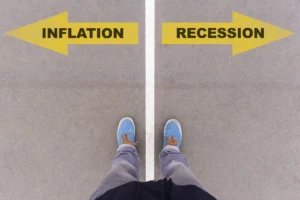
The global markets in 2025 continue to navigate two powerful economic forces: inflation and recession risk. These two forces reshape how investors view value, risk, and opportunity. Because both inflation and recession influence capital flows, corporate earnings, and consumer behaviour, the inflation and recession impact becomes the main driver behind price movements across all major asset classes.
Traders know that inflation pushes prices higher and challenges purchasing power. Recession does the opposite. It reduces output, suppresses demand, and reshapes confidence. Both forces create very different outcomes in equities, bonds, commodities, and currencies. As these dynamics evolve, the impact on asset classes becomes more visible, and the market performance during economic cycles shifts accordingly.
Inflation squeezes real returns, pushing investors toward assets that can maintain value. Recession increases caution, encouraging investors to seek stability. These shifts highlight the importance of understanding the inflation effects on investments and recognising how the recession influence on financial markets changes risk appetite.
This expanded article explains how these macro forces shape each major asset class in 2025, why reactions differ, and how traders can interpret these movements to make informed decisions.
Why Inflation and Recession Matter to Market Behaviour
Markets are not driven by random noise or endless technical patterns. They are driven by two alternating fears that dominate investor psychology for years at a time: the fear that money will quietly lose value (inflation) and the fear that everything can suddenly be wiped out (recession). These two states create completely different markets with completely different winners and losers. An asset allocation that looks genius in one environment becomes catastrophic in the other. The entire financial system — from central bank decisions to retail sentiment — reorganises itself around whichever fear is currently louder. Recognising which regime we are in (and when it is shifting) is the highest-conviction edge available to any investor or trader.
Inflation periods feel like a slow grind higher in yields and commodity prices, punctuated by sharp equity corrections whenever central banks surprise with tighter policy. Growth appears strong, unemployment is low, but purchasing power is under attack. Investors willingly embrace volatility as long as their portfolio grows faster than CPI. Recession periods, by contrast, arrive with sudden risk-off shocks, credit-spread blowouts, and liquidity crises that force even the strongest hands to sell. Growth collapses, confidence evaporates, and the only thing that matters is owning assets that cannot default or disappear overnight.
Distinct Characteristics of Each Regime
- Inflation regime → rising nominal yields, negative real rates, steepening yield curves, commodity bull markets, value/cyclical equity leadership.
- Recession regime → collapsing yields, massive flattening or inversion of curves, flight-to-quality rallies in government bonds, defensive and minimum-volatility equity outperformance.
- Inflation psychology → “I need my money to work harder than price increases” → tolerance for drawdowns if long-term real return is positive.
- Recession psychology → “I need to still have capital when this ends” → zero tolerance for permanent loss, obsession with liquidity and credit quality.
- Policy response speed → inflation is fought slowly and reluctantly; recession is fought instantly and with overwhelming force (QE, zero rates, fiscal bazookas).
- Volatility pattern → inflation delivers steady “grind” sell-offs; recession delivers violent air pockets and V-shaped recoveries once policy is fully priced.
Understanding this perpetual tug-of-war between the two fears explains more cross-asset price action than any indicator, earnings model, or chart pattern ever could. Get the dominant regime right, and sector rotation, currency trends, and bond/commodity behaviour fall into place almost automatically. Get it wrong, and you spend the entire cycle fighting the tape.

Equities: How Inflation and Recession Shape Stock Market Performance
Stock markets reflect growth expectations. They move based on how investors perceive future earnings and risk. Because of this sensitivity, the inflation and recession impact tends to show up quickly in equities.
Inflation affects margins and consumer spending. Recession affects revenues and hiring. Together, these forces create different outcomes across sectors. The market performance during economic cycles becomes easier to interpret once traders understand each sector’s economic link.

Equities During Inflation
Moderate inflation often supports revenue growth because prices rise gradually. Companies with strong brands or pricing flexibility can maintain margins. In those conditions, the inflation effects on investments in equities appear manageable, and markets can remain stable.
However, high inflation flips the narrative. Input costs rise faster than revenue. Borrowing becomes expensive. Consumers shift toward essentials. All these pressures reduce earnings. When earnings expectations fall, investors rotate out of growth-orientated sectors.
Sectors more resilient to inflation often include:
Energy:
Rising energy costs usually increase revenue for producers. Their ability to pass costs downstream often strengthens the impact on asset classes within commodity-linked equities.
Consumer Staples:
Demand for essentials holds steady. These companies often maintain pricing power, making the inflation and recession impact less severe.
Financials:
Banks may benefit when interest rates rise. Higher lending rates can expand income margins, although credit risk eventually rises if inflation persists too long.
On the other hand, growth sectors struggle. Technology, luxury goods, and discretionary retail face significant pressure. These areas depend on stable financing conditions and consumer confidence. When inflation rises, both conditions weaken. That shift increases negative inflation effects on investments across these sectors.
Equities During Recessions
Recession changes investor priorities dramatically. Instead of chasing growth, they prioritise stability. Earnings fall, demand slows, and business investments decline. This pressure creates a noticeable recession influence on financial markets within equities.
Cyclical sectors often see the steepest declines:
- Travel and leisure
- Autos and manufacturing
- High-end consumer discretionary
These industries rely on strong household spending and stable employment. During economic downturns, consumers postpone large purchases, leading to weaker revenue and falling stock valuations.
More resilient sectors include:
Healthcare:
Demand remains consistent because medical needs do not contract sharply. This creates more stable market performance during economic cycles for the sector.
Utilities:
Regardless of economic conditions, people still require electricity, water, and gas. This steady demand helps utilities avoid large revenue swings.
Consumer Staples:
Just like in inflationary conditions, these companies continue selling essential goods.
Financials and real estate often experience mixed outcomes. While lower interest rates provide relief, rising loan defaults and declining property demand can weigh on performance.
Understanding which sectors hold up in inflation and which stabilise during recessions helps investors manage the inflation and recession impact more effectively.
Bonds: How Fixed Income Reacts to Inflation and Recession
Fixed-income securities live or die by the path of interest rates and credit spreads, making bonds one of the most macro-sensitive asset classes. Inflation erodes the purchasing power of future coupons and principal, while recessions typically trigger aggressive central-bank easing and flight-to-quality flows. These opposing forces create sharply divergent performance across the yield curve and credit spectrum depending on the dominant regime.
Key Bond Market Reactions Across Economic Cycles
- Long-duration government bonds are the most vulnerable to rising yields; a 1% increase in rates can wipe out 10–20 years of coupon income in price terms.
- Short-term bills and floating-rate notes suffer the least in inflationary periods because they constantly reprice to current rates.
- Inflation-linked bonds (TIPS, Linkers, OATei) act as direct hedges; real yields can still rise, but the principal adjustment offsets CPI surprises.
- Investment-grade corporates usually follow their government benchmarks but lag on the way up (wider spreads) and lead on the way down (spread compression).
- High-yield and emerging-market debt behave almost like equities in risk-off recessions—default fears dominate yield direction.
- Safe-haven core government bonds (U.S. Treasuries, German Bunds, Japanese JGBs, UK Gilts) become the ultimate beneficiaries when central banks cut rates to zero or restart QE.
Bonds During Inflation
Inflation is public enemy number one for most fixed-income investors. Every unexpected percentage point of CPI forces markets to reprice the entire expected path of policy rates higher, crushing bond prices—especially at the long end where duration is highest. Central banks that fall behind the curve see their bonds sell off hardest, while those that hike aggressively can paradoxically see short-dated yields rise but long-dated yields stabilise or fall (a bear flattener).
How Different Fixed-Income Sectors Behave When Inflation Surges
- Long-dated nominal government bonds deliver the worst returns; duration amplifies losses dramatically (e.g., U.S. 30-year Treasuries lost ~35% peak-to-trough in 2022).
- Intermediate maturities still bleed but recover faster once the hiking cycle peaks.
- TIPS and inflation-linked bonds outperform dramatically; breakeven rates widen, and real yields often fall as investors pay up for inflation protection.
- Corporate bonds lag Treasuries because credit spreads widen simultaneously—investment grade is still positive in real terms in some cycles, and high yield is usually negative.
- Emerging-market local debt gets crushed when global yields spike and the dollar strengthens.
- Bank loans and floating-rate securities shine because coupons reset higher with each rate hike.
Bonds During Recessions
Recessions flip the script entirely. Central banks slash policy rates and restart quantitative easing, driving yields lower across the curve. At the same time, investors scramble for the safest, most liquid assets possible. The combination of falling rates and tightening credit spreads creates powerful bull steepeners and massive capital gains for high-quality, longer-dated debt.
Classic Recession Winners and Losers in Fixed Income
- Core long-dated government bonds (U.S. Treasuries, Bunds, JGBs) deliver equity-like returns as yields collapse (e.g., the U.S. 30-year fell from 4.7% to 0.9% in 2020).
- Investment-grade corporates outperform Treasuries on a total-return basis because spreads compress sharply once default fears peak.
- Agency MBS and high-quality securitised assets benefit from renewed Fed purchases and flight-to-quality flows.
- High-yield bonds initially plunge on default fears but stage violent snap-back rallies once central banks intervene aggressively.
- Emerging-market sovereign debt suffers heavily early in recessions but can rebound fastest if denominated in hard currency and backed by IMF programmes.
Commodities: How Real Assets React to Economic Cycles
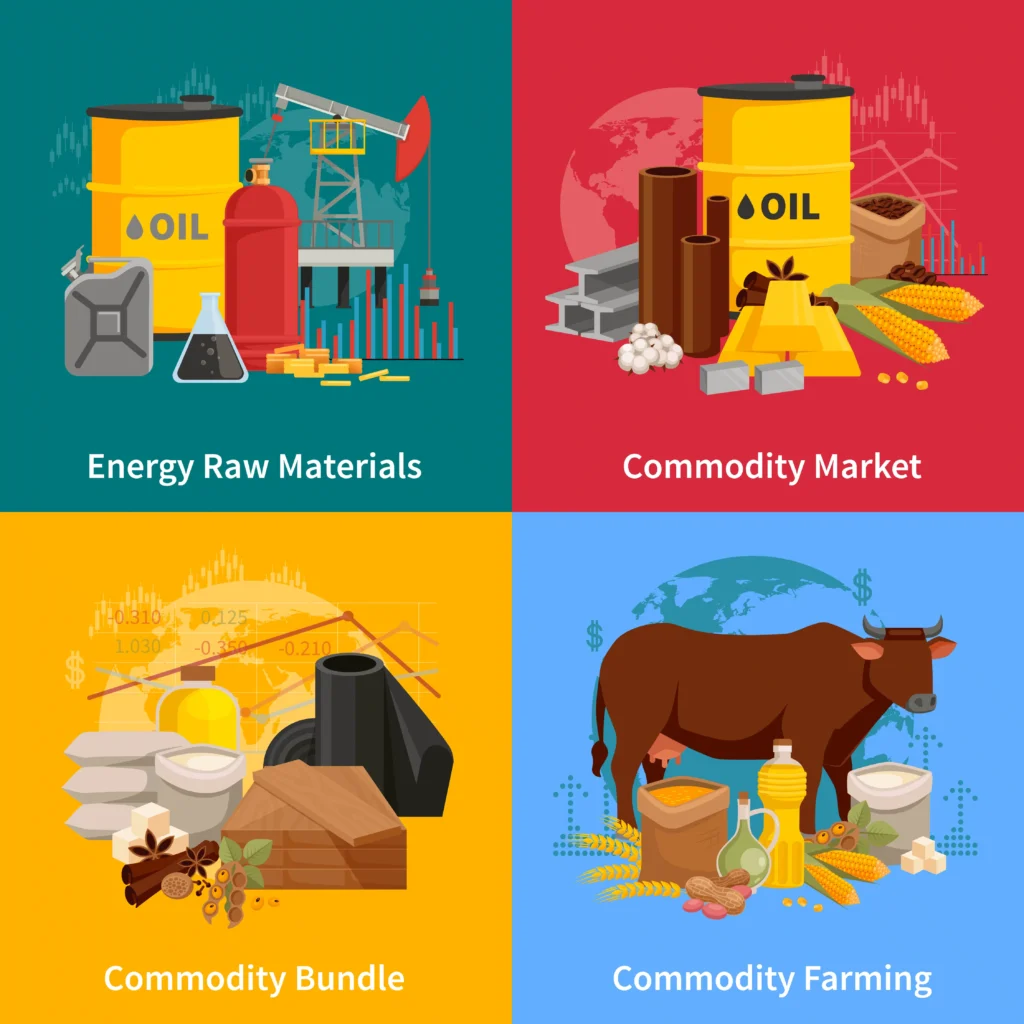
Commodities are the ultimate “real” assets—their prices are set by physical supply and demand, not financial engineering. This makes them extraordinarily sensitive to the global growth/inflation mix. When the world is growing above trend and inflation is rising, commodities enter powerful bull markets. When growth collapses, most commodities follow—except for the few that benefit from fear rather than prosperity.
Commodity Sector Behaviour in Different Macro Regimes
- The energy complex (crude oil, natural gas, refined products) tracks global industrial activity and transport demand with a very short lag.
- Base metals (copper, aluminium, and zinc) are pure cyclical plays—Dr Copper earns its nickname for good reason.
- Precious metals split into two camps: gold driven by real yields and fear, and silver behaving more like an industrial precious hybrid.
- Agricultural grains and softs have strong seasonal and weather components but still weaken in deep recessions as demand becomes elastic at high prices.
- Livestock tends to be more resilient because protein demand is relatively inelastic.
Commodities During Inflation
Inflationary periods are rocket fuel for most commodity markets. Rising input costs, currency debasement, and investor demand for hard-asset hedges create a perfect storm. Commodity indices routinely deliver double-digit or triple-digit returns when CPI is surging and real yields are negative.
Which Commodities Thrive When Prices Are Rising Everywhere?
- Crude oil leads the pack when global growth is strong or supply is geopolitically constrained.
- Industrial metals explode higher when manufacturing and construction booms accompany inflation.
- Broad commodity baskets (GSGI, BCOM) become one of the best-performing asset classes as every raw material rises simultaneously.
- Gold surges when real yields plunge deep into negative territory and fiat confidence wanes.
- Uranium, lumber, and niche metals often post the most violent moves because supply is inelastic and demand surprises to the upside.
Commodities During Recessions
Deep economic slowdowns crush demand for almost everything physical. Inventories build, production gets cut, and prices collapse—often well before official recession declarations. The 2008–2009 and 2020 experiences showed how fast commodity super-cycles can reverse when global trade freezes.
Recession Commodity Winners and (Mostly) Losers
- Gold decouples entirely—fear, central-bank buying, and negative real yields drive powerful rallies.
- Agricultural staples (wheat, corn, soybeans) fall far less than industrial commodities because people still eat.
- Natural gas can diverge wildly depending on weather and regional supply, sometimes becoming the only energy winner.
- Crude oil and base metals lead the collapse—copper routinely drops 30–50% within months of recession signals.
- Broad commodity indices deliver equity-like drawdowns with almost no bounce until central banks flood the system with liquidity again.
Master these regime-dependent patterns across bonds and commodities, and you have a reliable roadmap for navigating every twist of the inflation–recession cycle.
Currencies: How Inflation and Recession Move the Forex Market

Forex is the most sensitive asset class to shifts in global growth and price stability. Currencies trade in pairs, so their value is always relative—one economy’s strength is another’s weakness. When inflation surges or recession fears dominate headlines, trillions of dollars reposition almost instantly. Central banks, sovereign wealth funds, multinational corporations, and speculative flows all react to the same macro data, creating powerful and often prolonged trends in major, minor, and emerging-market pairs. Understanding the underlying drivers of these moves is essential for any trader or investor who wants to stay on the right side of risk.
What Actually Drives Currency Strength or Weakness in Different Regimes
- Real yield differentials dominate medium-term trends: the currency with the highest after-inflation interest rate usually attracts the most capital.
- Terms-of-trade shocks matter hugely for commodity-linked nations (AUD, CAD, NZD, NOK, ZAR); rising commodity prices can offset domestic inflation weakness.
- Safe-haven flows override fundamentals during panic: USD, JPY, and CHF benefit from forced deleveraging and repatriation regardless of their own economic health.
- Carry trade dynamics reverse violently in risk-off periods: high-yield emerging currencies (TRY, BRL, MXN, IDR) collapse when global liquidity tightens.
- Central bank credibility is the ultimate tie-breaker: markets forgive high inflation in countries that eventually hike aggressively (e.g., USD 2021–2023), but punish those that lag or deny the problem.
Currencies During Inflation
Inflation is the single biggest fundamental driver of sustained currency trends. When price pressures build faster than expected, central banks are forced to tighten policy. Higher interest rates attract foreign capital seeking better real returns, pushing the currency stronger. However, the outcome is never automatic—markets care far more about the speed and credibility of the policy response than the inflation print itself.
How Different Types of Inflation Affect Currency Performance
- Demand-pull inflation in strong economies (e.g., the U.S. 2021–2022) usually leads to aggressive rate hikes and a sharply stronger currency.
- Imported inflation in small open economies (Eurozone 2022, UK 2022–2023) often weakens the currency first because energy and food costs rise faster than domestic rates.
- Wage-driven inflation spirals (rare but devastating) destroy confidence and cause prolonged currency depreciation (e.g., Turkey 2018–2025, Argentina ongoing).
- Commodity-currency winners: Australia, Canada, Norway, and Russia often see their currencies hold up or strengthen when global inflation is commodity-led.
- Chronic policy denial: currencies like the Japanese Yen (2021–2024) or Turkish Lira can lose 50–80% of their value when central banks refuse to tighten in the face of double-digit inflation.
Currencies During Recessions
When growth collapses and risk aversion spikes, capital flows reverse dramatically. Investors and corporations repatriate funds, unwind carry trades, and hoard liquidity in the most credible monetary jurisdictions. The result is a violent bid for the three traditional safe-haven currencies, often regardless of their domestic fundamentals.
Classic Recession Currency Patterns That Repeat Almost Every Cycle
- U.S. The dollar surges as the world’s reserve currency and home of the deepest bond market—every global deleveraging event since 1980 has strengthened USD.
- The Japanese yen rallies on forced repatriation by life insurers and pension funds, plus the unwinding of yen-funded carry trades.
- Swiss Franc benefits from Switzerland’s perennial current-account surplus and political neutrality; SNB interventions are the only thing that ever cap CHF strength.
- Emerging-market collapse: high-beta currencies (South African Rand, Brazilian Real, Mexican Peso, Turkish Lira) routinely lose 20–50% in months as capital flees.
- Euro vulnerability: despite being a funding currency, EUR often weakens sharply in recessions because the Eurozone lacks fiscal union and has chronic current-account disparities.
Key Insights: How Major Assets Behave Across Economic Cycles
Every economic cycle forces investors to rotate between growth-sensitive, inflation-sensitive, and safety-sensitive assets. The same macro regime that strengthens or weakens currencies also dictates performance in equities, bonds, commodities, and precious metals. Recognising these repeating patterns is one of the highest-conviction edges in global macro trading.
Typical Asset-Class Winners and Losers in Each Regime
- High inflation + strong growth: commodity currencies (AUD, CAD, NOK), energy/extractive stocks, real assets, and TIPS outperform; long-duration bonds and low-volatility defensives lag.
- High inflation + weakening growth (stagflation): gold, silver, oil, and real estate hold value; most equities and corporate bonds suffer in real terms.
- Recession + falling inflation: U.S. Treasuries, high-grade corporate bonds, defensive sectors (utilities, staples, and healthcare), and safe-haven currencies dominate.
- Recession + deflation threat: cash (USD, JPY, CHF) and long-dated government bonds become almost the only positive-return assets.
- Early-cycle recovery: risk-on currencies (EM FX, commodity dollars), cyclical equities, industrial metals, and high-beta assets lead the rebound.
These relationships are not theory—they have played out with remarkable consistency across the 1970s stagflation, the 2008–2009 financial crisis, the 2020 pandemic shock, and the 2022–2023 inflation fight. Master the macro regime, and you instantly know which currencies and asset classes deserve overweight allocation versus defensive avoidance.
Frequently Asked Questions
1. Which assets usually perform best during inflation?
Commodities, some equity sectors, and inflation-linked bonds often hold up well. These assets help offset inflation effects on investments when purchasing power weakens.
2. What happens to bonds when inflation rises?
Bond prices fall as yields rise. Long-duration bonds suffer most because their fixed payments lose real value. This is a clear example of the inflation and recession impact on fixed income.
3. How do stock markets react before a recession?
Equities often decline before a recession begins. Investors anticipate lower earnings and shift toward safer assets. The recession’s influence on financial markets appears early in equity markets.
4. Why does gold rise when inflation or recession risk increases?
Gold is seen as a store of value. It attracts inflows when confidence in currency or growth weakens. This reinforces the impact on asset classes during uncertain periods.
5. How do currencies react during a global recession?
Safe-haven currencies usually strengthen. Export-linked and emerging market currencies weaken as global demand drops. This move reflects broader market performance during economic cycles.

Conclusion
The inflation and recession impact defines market behaviour in 2025. Inflation erodes real returns and reshapes pricing power. Recession reduces demand and shifts focus toward stability. Because investors react differently to each condition, the impact on asset classes varies widely across equities, bonds, commodities, and currencies.
The inflation effects on investments encourage traders to focus on real assets, pricing power, and inflation-adjusted income. Meanwhile, the recession’s influence on financial markets leads investors toward safety, predictability, and high-quality instruments.
No asset performs well in every environment. However, traders who understand these forces can anticipate shifts in the market performance during economic cycles. They can adjust risk, reposition exposure, and protect capital with more confidence.
As 2025 progresses, inflation pressures and recession signals may appear together. The investors who respond with flexibility, discipline, and informed judgement will navigate these cycles most effectively.
Read here to learn more about “Opening Range Breakout Setup: How It Shapes Trading Results“

I’m Chaitali Sethi, a financial writer and market strategist focused on Forex trading, market behaviour, and trader psychology. I simplify complex market movements into clear, practical insights that help traders make better decisions and build a stronger trading mindset.