How to start forex trading for beginners is an important topic worth understanding. I’m gonna be brutally honest with you. The internet is full of forex tutorials, beginner guides, YouTube videos with thumbnails showing stacks of cash. Almost none of them tell you the real reason 70 to 80% of retail traders lose money in their first year. I know because I was one of them, fifteen years ago. My name is Vinit Makol, I’m the CEO of TradeForex.AI, I run a Telegram community of over 5,000 active traders, and I’ve spent the better part of two decades learning what actually works in forex. Not what sounds good. What works.
Here’s what this post is going to do. I’m going to walk you through exactly how to start forex trading for beginners in 2026, step by step, but I’m going to do it differently. Before I tell you what buttons to click, I’m going to tell you the things I wish someone had told me before I blew my first $5,000 account in 47 days. The stuff nobody talks about because it doesn’t sell courses. No fluff. No generic advice you’ve already heard. Just the raw, unfiltered truth from someone who has lived every mistake you’re about to make.
If you’re looking for a post that tells you forex is easy money, close this tab. But if you want a genuine roadmap that keeps your account alive long enough to actually learn, keep reading.
- Why 80% of Forex Beginners Lose Money (The Real Reasons)
- What Is Forex Trading, Really? (No Textbook Nonsense)
- The 6 Things You Must Do Before Your First Trade
- How to Choose a Broker Without Getting Burned
- Your First Trading Strategy (Keep It Stupidly Simple)
- The Smarter Path: Why AI and Managed Accounts Exist
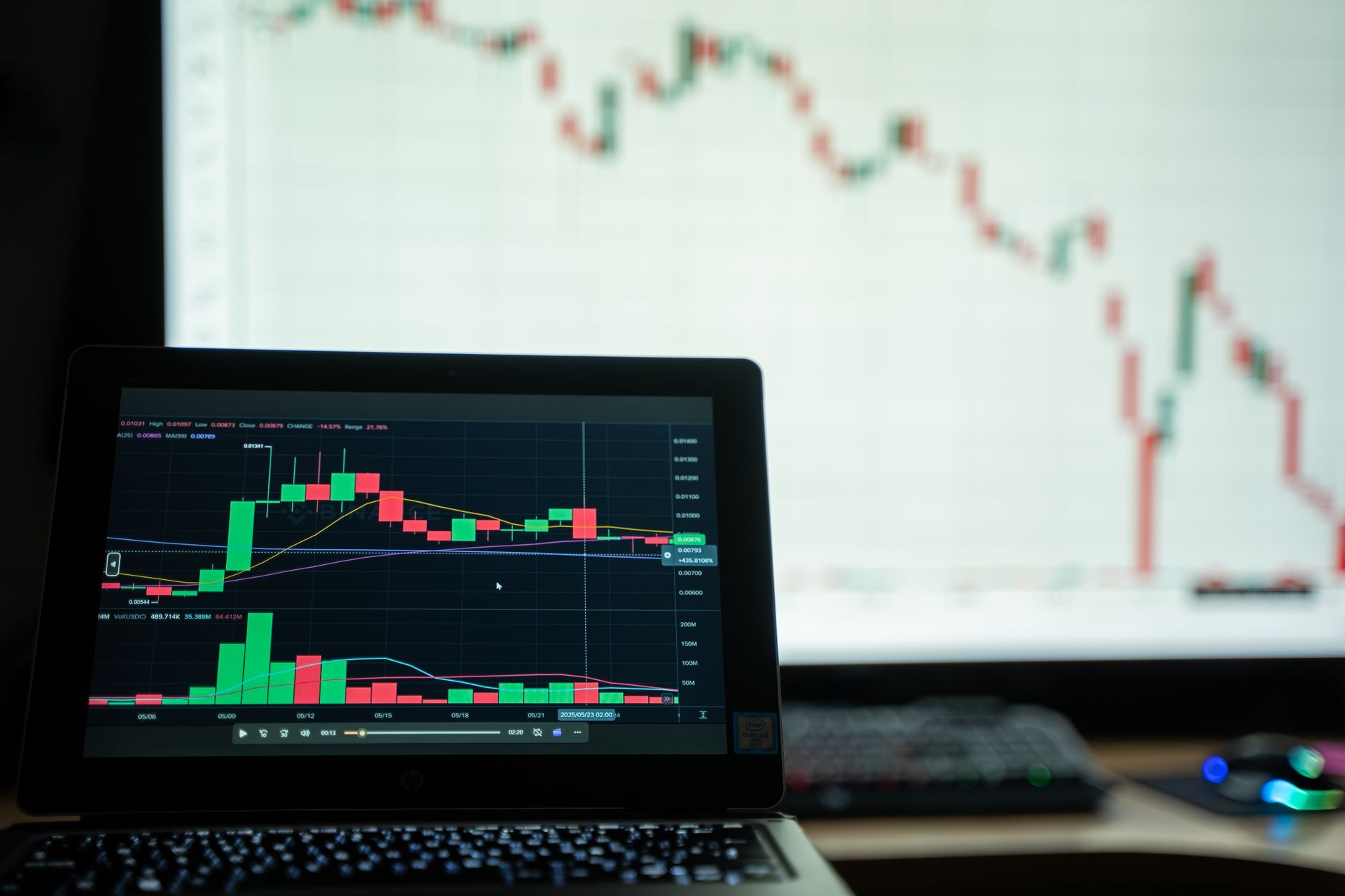
Chart by TradingView
Why 80% of Forex Beginners Lose Money (The Real Reasons)
Let’s start with the uncomfortable part. I could jump straight into “what is a pip” and “how to read a candlestick chart,” but if I do that, I’m doing you a disservice. Because knowing the mechanics of forex doesn’t keep you profitable. Understanding why people fail does.
It’s Not the Market. It’s You.
Most traders get this completely wrong. They think they lost because the market “manipulated” them, or because their broker spiked the spread, or because the news was unpredictable. Sometimes those things happen, sure. But in 95% of cases, the reason you lose is one of these three things:
- Overleveraging: You risked 10% of your account on a single trade because it “looked perfect.” One bad loss and you’re down 10%. Two bad losses and the psychology spirals.
- No trading plan: You opened a trade because a candle looked bullish. That’s not a strategy. That’s gambling with a chart in front of you.
- Revenge trading: You lost $200, felt angry, doubled your lot size to “make it back,” and lost $400 instead. I’ve seen this destroy accounts in under 24 hours. If this sounds familiar, read how to stop revenge trading before it ruins you.
of retail CFD/forex accounts lose money, according to regulatory disclosures required by ESMA across EU-regulated brokers (2024-2025 data)
That number isn’t made up. It comes from the mandatory risk disclosures that every regulated broker in the EU has to publish. And the number has barely changed in years. Here’s the thing, it doesn’t mean forex is a scam. It means that most people approach it wrong. They treat it like a lottery ticket instead of a skill that takes 6 to 12 months of serious study before you can expect consistent results.
What Is Forex Trading, Really? (No Textbook Nonsense)
If you’ve never traded before, let me explain this in plain English. Forget the Wikipedia definition.
The Basics in 60 Seconds
Forex (foreign exchange) is the global market where currencies are traded against each other. When you exchange dollars for euros at the airport, you’re technically doing a forex transaction. The trading market takes that concept and lets you speculate on whether one currency will strengthen or weaken against another.
Here’s how it works in practice:
- You pick a currency pair, like EUR/USD (Euro vs US Dollar). This is the most traded pair in the world, accounting for about 22% of daily forex volume.
- You decide whether the price will go UP (you buy, also called “going long”) or DOWN (you sell, also called “going short”).
- You set your trade size (lot size). A standard lot is 100,000 units. A micro lot is 1,000 units. As a beginner, you should be trading micro lots. Period.
- Price moves in pips. One pip on EUR/USD equals $0.10 per micro lot, $1.00 per mini lot, or $10.00 per standard lot.
- You close the trade for a profit or a loss. That’s it.
The forex market is open 24 hours a day, 5 days a week. Daily volume is roughly $7.5 trillion according to the BIS Triennial Survey cited by BabyPips. It’s the largest financial market on the planet. And because of that liquidity, it’s one of the best markets for retail traders, IF you learn to trade it properly.
Key Terms You Actually Need to Know
| Term | What It Actually Means | Example |
|---|---|---|
| Pip | The smallest price increment (usually 4th decimal place) | EUR/USD moves from 1.0850 to 1.0860 = 10 pips |
| Lot Size | How big your trade is | 0.01 lot = micro (1,000 units), 0.10 = mini, 1.0 = standard |
| Leverage | Borrowed capital from your broker to control a larger position | 1:100 leverage = $100 controls $10,000 |
| Spread | The cost of entering a trade (difference between buy and sell price) | EUR/USD spread of 1.2 pips = $0.12 cost per micro lot |
| Stop Loss | An automatic order that closes your trade at a set loss level | Buy EUR/USD at 1.0850, stop loss at 1.0820 = risking 30 pips |
| Take Profit | An automatic order that closes your trade at a set profit level | Buy EUR/USD at 1.0850, TP at 1.0910 = targeting 60 pips |
Don’t try to memorize every term on the planet before you start. These six will get you through your first month. You’ll learn the rest in context as you go.
The 6 Things You Must Do Before Your First Trade
This is the part most people skip. And it’s exactly the part that determines whether you’re still trading 6 months from now or you’ve rage-quit and told everyone forex is a scam.
Your Pre-Trade Checklist
- Open a demo account first. I don’t care how eager you are. Trade on a demo account for a minimum of 30 days. Use the same lot sizes you would use with real money. If you can’t be profitable on demo, real money won’t magically fix that.
- Learn to read a candlestick chart. You don’t need 47 indicators. Start with naked price action. Learn what a pin bar is, what an engulfing candle is, and what support and resistance levels look like. BabyPips has a free course that covers this perfectly.
- Define your risk per trade. This is non-negotiable. Risk 1% of your account per trade, maximum. If you have a $500 account, that’s $5 per trade. If you have a $1,000 account, that’s $10. This one rule alone will keep you alive. For a deeper dive, read my full breakdown on forex risk management.
- Pick ONE currency pair. Don’t scatter your attention across 15 pairs. Start with EUR/USD or GBP/USD. Learn how they move, what times they’re most volatile (London and New York sessions, roughly 8am to 4pm GMT), and what drives them.
- Set a schedule. Forex is 24 hours, but you shouldn’t be. Pick 2 to 3 hours per day, preferably during the London open (8am GMT) or the New York overlap (1pm to 4pm GMT). Consistency beats screen time.
- Start a trading journal from day one. Write down every trade. Entry, exit, lot size, reason for the trade, what you did right, what you did wrong. I’ve been trading 15 years and I still journal my trades. Every single one.
Here’s the thing. None of this is glamorous. Nobody makes a viral TikTok about journaling their demo trades. But this is what separates the 20% who survive from the 80% who don’t.
How to Choose a Broker Without Getting Burned
I’m not going to recommend a specific broker here. What I am going to do is tell you exactly what to look for and what to avoid, because the wrong broker can cost you money before you even place a trade.
What to Look For
- Regulation. This is number one. Your broker must be regulated by a reputable authority: FCA (UK), ASIC (Australia), CySEC (EU), or CFTC/NFA (US). If they’re regulated in some offshore jurisdiction you’ve never heard of, walk away.
- Spreads and commissions. Compare the average spread on EUR/USD. Anything above 1.5 pips on a standard account is too high in 2026. Most decent brokers offer 0.8 to 1.2 pips, or raw spreads of 0.0 to 0.3 pips plus a commission of $3 to $7 per lot.
- Execution speed. You want execution under 100 milliseconds. Slippage happens, but it should be rare and small.
- Withdrawal process. Test this early. Deposit a small amount, place a trade, then withdraw. If they make withdrawals difficult, you have your answer. Leave.
- Platform options. MetaTrader 4, MetaTrader 5, or cTrader are the industry standards. If a broker only offers their proprietary platform with no MT4/MT5 option, be cautious.
Red Flags That Should Make You Run
- Promises of guaranteed returns or “no risk” trading
- Bonuses with withdrawal conditions attached (like “trade 50 lots before you can withdraw your bonus”)
- Unregulated or regulated in Vanuatu, St. Vincent, or the Marshall Islands
- Pressure to deposit more money via phone calls from “account managers”
- Spreads that mysteriously widen to 20+ pips right before news events
“The market doesn’t care about your opinion, your feelings, or how many YouTube videos you watched. It rewards preparation and punishes ego. Every single time.”
Your First Trading Strategy (Keep It Stupidly Simple)
And this is where it gets real. You’ve opened a demo account, you’ve picked EUR/USD, you understand what a pip is. Now what? You need a strategy. But here’s the controversial take. I don’t care if this upsets people. You do NOT need a complex strategy with 5 indicators, 3 timeframes, and Fibonacci retracements layered on top of Ichimoku clouds. That’s a recipe for analysis paralysis.
The “Support, Resistance, and Confirmation” Strategy
This is what I teach brand new traders. It’s dead simple. It works. And it will teach you more about how price actually moves than any indicator ever will.
- Identify a key support or resistance level on the 4-hour chart. Look for a price level that has been tested at least twice. The more touches, the more significant the level.
- Wait for price to reach that level. Do not anticipate. Do not enter early. Wait.
- Look for a confirmation candle. At the support level, look for a bullish pin bar or bullish engulfing candle. At resistance, look for a bearish pin bar or bearish engulfing candle.
- Enter the trade. Place your stop loss 5 to 10 pips beyond the level (below support or above resistance). Set your take profit at a minimum 1:2 risk to reward ratio. If you’re risking 30 pips, target 60 pips.
- Walk away. Seriously. Set it and forget it. Check back in 4 to 8 hours.
Let me be clear. This strategy won’t win every trade. Nothing will. But with proper risk management (1% per trade) and a 1:2 reward ratio, you only need to be right 40% of the time to be profitable. Do the math. If you take 10 trades, risk $10 per trade, lose 6 (minus $60) and win 4 at $20 each (plus $80), you net $20. That’s profitability with a 40% win rate. Right?
Most beginners think you need an 80% win rate to make money. You don’t. You need good risk management and patience. That’s it.
Join 5,000+ Traders on Telegram
Real-time setups, live trade alerts every London open. Free access.
The Smarter Path: Why AI Tools and Managed Accounts Exist
But, and this is the part most people miss, you don’t actually have to do all of this manually. I spent years learning price action, burning through demo accounts, losing real money, before I became consistently profitable. The landscape in 2026 is completely different from when I started.
Why Manual Trading Isn’t the Only Option Anymore
Here’s the thing. Learning to trade manually is valuable. I’d never tell someone not to learn. But the reality is that most people don’t have 2 to 3 years to sit in front of charts before they can trade confidently. They have jobs, families, lives. And the market doesn’t wait for you to “get good.”
That’s exactly why we built the systems at TradeForex.AI. Our AI-powered trading tools and signals remove the emotional decision-making that kills most beginners. They don’t guarantee profits. Nothing does. But they take the two biggest beginner killers, emotional trading and poor analysis, and reduce their impact dramatically.
If you want to understand how AI signals stack up against pure manual analysis, I wrote a detailed comparison in AI forex trading signals vs. human analysis.
The Hybrid Approach I Recommend
- Months 1 to 3: Trade on demo. Learn the basics of price action. Study support and resistance. Journal everything.
- Months 3 to 6: Go live with a micro account ($200 to $500). Risk 1% per trade. Use AI signals as a second opinion alongside your own analysis.
- Months 6 to 12: Evaluate your results. If you’re profitable, scale slowly. If you’re not, consider a managed account or copy trading while you continue learning.
I’ve been trading 15 years and I still use AI tools to scan for setups I might miss. It doesn’t make me less of a trader. It makes me a smarter one. The traders who survive long term are the ones who evolve with the tools available to them.
The Honest Minimum Capital Numbers
People ask me this all the time. “How much do I need to start?” Let me give you real numbers:
- $100 to $200: You can open a micro account, but your growth will be painfully slow. Realistic monthly return for a skilled trader is 3 to 8%, which means $3 to $16 per month. It’s good for learning, terrible for income.
- $500 to $1,000: This is my recommended starting range. You can take meaningful micro lot positions, survive a string of losses, and actually feel the psychological pressure of real money without risking your rent.
- $5,000+: This is where trading starts to make financial sense. A 5% monthly return on $5,000 is $250. That’s not life-changing, but it’s real. And it compounds.
Anyone telling you that you can turn $50 into $10,000 in a month is lying to you. Stop following those people.
FAQ: How to Start Forex Trading for Beginners
How much money do I need to start forex trading as a beginner?
You can technically start with as little as $50 to $100 at many brokers offering micro and cent accounts. However, the recommended starting capital is $500 to $1,000 to allow proper risk management at 1% per trade. With a $500 account, you’d risk $5 per trade, which gives you enough room to survive a losing streak of 10+ trades without blowing your account. According to Investopedia, undercapitalization is one of the top reasons retail forex traders fail. Start with an amount you can genuinely afford to lose, because during the learning phase, losses are part of the process. Think of it as tuition for your trading education.
How long does it take to learn forex trading from scratch?
Expect a minimum of 3 to 6 months of consistent study and demo trading before you have any business risking real money. Becoming consistently profitable typically takes 12 to 24 months for most traders who take it seriously. According to data shared on ForexFactory community surveys, traders who journal their trades and follow a structured learning path reach profitability faster than those who jump between strategies. The key milestones are: understanding chart reading (month 1 to 2), building and testing a strategy on demo (month 2 to 4), and transitioning to live micro trading (month 4 to 6). There’s no shortcut, but there is a faster path if you use structured tools and communities.
Can you start forex trading with no experience at all?
Yes, absolutely. Every professional trader started with zero experience. The forex market is accessible to complete beginners through demo accounts, which let you practice with virtual money in real market conditions. The critical step is to treat your learning phase seriously. Use free resources from BabyPips School of Pipsology, which is widely considered the best free forex education available online. Start on a demo account, learn one strategy thoroughly, and do not fund a live account until you’ve been consistently profitable on demo for at least 30 trading days. The barrier to entry is low, but the barrier to profitability requires discipline, risk management, and emotional control.
Is forex trading profitable for beginners in 2026?
Forex trading can be profitable, but the majority of beginners lose money in their first year. Regulated broker disclosures across Europe consistently show that 70 to 80% of retail accounts are in the red. That said, the 20 to 30% who are profitable share common traits: they use strict risk management (1 to 2% per trade), they follow a tested strategy, and they treat trading as a business rather than a get-rich-quick scheme. In 2026, beginners have more tools than ever, including AI-powered trading signals, copy trading platforms, and advanced charting tools on TradingView. The market hasn’t gotten easier, but the tools to navigate it have improved dramatically for those willing to put in the work.
You Might Also Like
- Forex Risk Management: The One Skill That Separates Profitable Traders From Blown Accounts
- Your First Forex Trade Using RSI Divergence: A 2026 Beginner’s Checklist
- I Blew a $10K Account Before Learning RSI Divergence: Lessons in Overtrading and Revenge Trading
📣 Found this useful? Share it.