
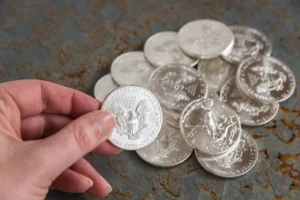
As silver becomes a strategic material, markets and manufacturers worldwide brace for long-term consequences.
Introduction: Why “Silver Now Strategic” Defines the 2026 Global Trade Shift
The phrase “Silver Now Strategic” captures one of the most important trade and market changes of 2026.
China, the world’s largest producer of silver, has officially reclassified the metal as a strategic resource, placing it under tight export supervision just like rare earths, tungsten, and antimony.
This isn’t just about paperwork. It’s about who controls the flow of one of the world’s most critical industrial metals. From solar panels and electric vehicles to defence hardware and semiconductors, silver sits at the heart of modern innovation.
Starting January 1, 2026, only 44 companies are allowed to export silver from China. This new approval-based system means Beijing decides who gets supply, when, and how much, giving it a powerful tool to influence global industries and pricing.
Silver prices have already reflected this shift. After doubling in 2025 and touching $82.60 per ounce in December, the metal opened 2026 with renewed strength, hovering around $80–$83. Analysts expect more volatility as new trade rules take hold.

China’s Tightened Silver Export Controls Explained
New Approval-Based Framework
China’s Ministry of Commerce has shifted silver exports from open trade to a controlled approval system, similar to the one used for rare earths and tungsten.
Only 44 licensed companies can export silver between 2026 and 2027, and every shipment must receive official approval detailing the destination, quantity, and industrial use.
This change gives Beijing direct oversight of all silver leaving the country. It can tighten or relax exports based on domestic demand or political conditions, restrict shipments during shortages, or prioritise friendly trading partners.
Even without a formal ban, China can now influence global silver supply and prices simply by adjusting approvals. The message to global buyers is clear: access to Chinese silver now depends on government approval, not free market demand.
Why Silver Was Upgraded
China’s decision to classify silver as a strategic material is part of its long-term plan to secure leadership in critical resources.
The Securities Times confirmed that silver has been “formally elevated to a strategic category alongside rare earths.”
This move supports China’s goals in:
- Energy security – ensuring steady supply for solar and battery industries.
- Defence production – providing key materials for radar and satellite systems.
- Advanced manufacturing – supporting semiconductors, EVs, and medical equipment.
In 2025, China exported over 4,600 tonnes of silver while importing just 220 tonnes, showing its dominant position.
By making silver a strategic asset, China is protecting its industries and reshaping global supply chains, signalling that access to vital materials will now be guided by national priorities rather than open trade.
Timing and Strategy Behind the Decision
Global Context and Strategic Planning
China’s decision to tighten silver exports was not a sudden move. It came from a carefully planned strategy that started in late 2024, when the government began reviewing export policies for critical materials during trade talks with the United States.
At that stage, China showed limited flexibility on rare-earth exports but quietly prepared a broader plan to strengthen control over silver, tungsten, and antimony metals crucial to industrial growth and defence technology.
By December 2025, the plan was in full effect. The final list of 44 approved silver exporters was released just as global demand hit record highs, driven by rising clean energy and defence needs. The timing gave China a stronger hand in influencing prices and supply across global markets.
China’s strategy follows a familiar pattern: protecting national interests through control in areas where it already leads. This approach allows Beijing to:
- Support domestic industries that rely on consistent access to key materials.
- Influence global prices and trade flows without direct restrictions.
- Maintain geopolitical leverage in negotiations with major economies.
This calculated policy shows how China understands the power of resources in shaping global industry and trade. Control over materials like silver is now a key part of its long-term economic and diplomatic strategy.
Strategic Signal to Global Markets
The timing of the new export controls is deliberate. It shows China’s intent to make critical minerals a part of its national security and foreign policy framework.
By declaring silver a strategic resource, China ensures that countries heavily dependent on its exports, especially the United States, Japan, and the European Union, must now factor Chinese approval processes into their production and supply planning.
This is more than a simple trade change. It is a form of resource diplomacy, where control over materials becomes a tool to influence global behaviour. Through this system, China can:
- Control manufacturing timelines by approving or delaying shipments.
- Adjust trade balances through selective licensing and export volumes.
- Use soft power to strengthen its position without direct confrontation or sanctions.
In short, export control has become a powerful form of economic statecraft. By managing who receives key materials and when, China is shaping outcomes in global industries such as solar energy, semiconductors, and advanced manufacturing, reinforcing its central role in the world’s supply chain.
Why Silver Matters More Than Ever
Silver’s Expanding Industrial Role
Silver is no longer just for jewellery or coins—it’s everywhere. Its conductivity, reflectivity, and durability make it irreplaceable in:
- Solar panels – crucial for photovoltaic cells powering renewable energy
- Electric vehicles – used in battery connections and onboard circuitry
- Semiconductors – for microchips and circuit paths
- Medical technology – due to its antimicrobial properties
- Defence and aerospace – radar systems, missiles, and satellites
Production Data and China’s Dominance
In 2025, China exported over 4,600 tonnes of silver but imported just 220 tonnes. That imbalance gives Beijing enormous influence.
The U.S. added silver to its Critical Minerals List in November 2025, joining gold, lithium, and cobalt—acknowledging the risk of dependency on China.
Meanwhile, Mexico and Peru remain the top two global producers outside China but face logistical and environmental challenges limiting quick expansion.
How Global Industries Are Reacting
Corporate Responses
Industrial leaders are on alert. Elon Musk criticised the decision, calling it “a direct hit on clean energy production” since silver is essential in EV battery and solar cell manufacturing.
A European Chamber of Commerce survey found that three out of four foreign companies in China expect disruptions to their supply chains in 2026.
Even Japanese manufacturers have started stockpiling silver components ahead of potential shortages.
India’s Market Reaction
India, one of the largest silver consumers, has seen spot prices soar to ₹242,000 per kilogram in early January 2026, a sharp rise from ₹118,000 a year earlier. Local traders report increased imports from Mexico and Russia to fill the gap.
Premiums in the Physical Market
Canadian producer Kuya Silver reported being offered $10 above spot price by Asian buyers in December 2025. Such premiums—rare for silver—highlight growing fears of supply scarcity.
Price Movements and Market Sentiment
2025’s Record Rally
Silver gained over 102% through 2025, closing the year around $82.60/oz, its best performance since 1979. Gold rose nearly 60%, reaching $4,360/oz by year-end.
This rise wasn’t just about demand; it reflected currency weakness too. The U.S. Dollar Index slid nearly 10%, its worst drop in nine years, while Bitcoin struggled, down around 12% for the year.
2026 Early Trends
In early January 2026, silver futures remain firm near $80–$83/oz, supported by:
- Tighter Chinese export rules
- Investor flight to tangible assets
- Strong demand from solar and defence sectors
Most analysts expect volatility ahead, with possible spikes if China delays export approvals.
The Broader Picture: China’s Strategy of Resource Power
From Rare Earths to Precious Metals
China’s decision to classify Silver Now Strategic extends its pattern of resource leverage using material control to influence global industries.
By adding silver, tungsten, and antimony to its controlled list, Beijing ensures that critical supply chains, especially those in the U.S. and Europe, remain tied to its export policy.
The Global Ripple Effect
- Europe: Solar manufacturers are seeking alternate suppliers in Chile and Mexico.
- U.S.: The Department of Energy is reviewing stockpile policies and incentives for domestic recycling.
- India: The government is exploring a silver-recycling initiative to reduce import dependency.
- Japan: Industrial buyers are lobbying for long-term supply agreements with South American miners.
Scenarios for 2026: What Could Happen Next
1. Optimistic Scenario
- New mining projects in Mexico, Peru, and Australia boost global supply.
- Silver stabilises between $70 and $75/oz.
- Clean-energy industries adapt to higher costs through recycling and innovation.
- Trade tensions cool, encouraging moderate export approvals from China.
2. Neutral Scenario
- China maintains controlled but steady exports.
- Silver trades around $75–$80/oz through mid-2026.
- Investors treat silver as both a hedge and a strategic commodity.
- Markets gradually adjust to the “new normal” of controlled supply.
3. Risk Scenario
- U.S.–China tensions escalate over technology and trade policy.
- Beijing temporarily limits export licences.
- Silver spikes above $100/oz, causing inflation in electronics and EV sectors.
- Stockpiling accelerates worldwide, straining physical availability.
What Traders and Investors Should Watch in 2026
- Chinese Export Data: Monthly updates from the 44 approved firms will be the best clue to actual supply.
- ETF and Futures Flows: Rising holdings often precede industrial shortages.
- Policy Moves: Watch for new U.S. and EU subsidies for domestic mining or recycling.
- Currency Shifts: Dollar weakness can magnify silver’s upside trend.
- Global Demand: Solar and EV sector demand could exceed projections if green investment accelerates.
For traders, “Silver Now Strategic” means volatility and opportunity will move together in 2026. Flexibility, hedging, and position management will matter more than prediction.
You can read here to learn more about “10 Lessons from Silver Price Movements Investors Should Know“
Misconceptions to Avoid
It’s Not a Ban
Many people believe China has completely stopped exporting silver, but that is not true. Silver exports are still happening, though under stricter government supervision. Every shipment now requires official approval, and only a limited number of companies are allowed to export.
China has not banned silver; it has simply moved to a more controlled system that allows it to manage global supply and pricing with greater flexibility. This shift helps protect domestic industries while giving the government more influence over trade and industrial strategy.
Through this system, China can:
- Decide which companies can export and how much they can sell.
- Delay or approve shipments depending on market conditions.
- Maintain stability in domestic production while controlling international supply.
In short, silver is still being traded internationally, but now under close supervision from Beijing, giving it greater power in the global metals market.
It’s Not Just Speculation
The strong rise in silver prices is not just driven by speculation. It reflects genuine industrial demand and tightening supply caused by China’s export controls.
Silver is now a crucial component in industries that are expanding rapidly worldwide. It is used in clean energy, technology, and healthcare, which all require large quantities of this metal.
Key areas where demand is growing include:
- Solar power: Silver is vital in photovoltaic cells used to convert sunlight into electricity.
- Electric vehicles: It is used in batteries, circuits, and charging systems.
- Semiconductors and electronics: Silver ensures strong conductivity and precision in chips and wiring.
- Medical technology: It plays an important role because of its antibacterial and conductive properties.
Investors are not just chasing short-term profits. They are responding to real-world changes—rising industrial demand, limited export supply, and new strategic policies. These factors have made silver both a critical industrial metal and a long-term investment asset.
Summary
- Silver Now Strategic — China has elevated silver to strategic material status, reshaping global trade flows.
- Limited Exporters — Only 44 firms can export silver under the new 2026–2027 rules.
- Price Boom — Silver closed 2025 above $82/oz, its best year since 1979.
- Industrial Impact — Clean energy, defence, and electronics sectors face rising costs.
- Policy Shift — Western economies are turning to diversification, recycling, and local mining.
- Market Outlook — Expect volatility as traders react to export data and political developments.

Global Power Now Runs on Strategic Metals
The rise of “Silver Now Strategic” signals a clear turning point in global trade.
Metals like silver are no longer just industrial commodities; they have become strategic assets that shape technology, energy, and global influence.
China’s export policy proves that supply control can be just as powerful as financial policy. By deciding who receives silver and when, China is quietly steering the direction of global industries that depend on it.
As the world moves through 2026, this reality is becoming more visible. Traders will face new volatility, industries will need to adjust their sourcing, and policymakers will have to rethink how they secure critical materials.
The next wave of global competition will not be defined by oil or data alone, but by the metals that power clean energy, digital infrastructure, and defence technology.
In this new era, whoever controls the resources controls the future, and silver is leading that shift.
Read here to learn more about ‘Gold and Silver 2026: Precious Metals Extend Powerful Rally‘

I’m Chaitali Sethi, a financial writer and market strategist focused on Forex trading, market behaviour, and trader psychology. I simplify complex market movements into clear, practical insights that help traders make better decisions and build a stronger trading mindset.