Summary
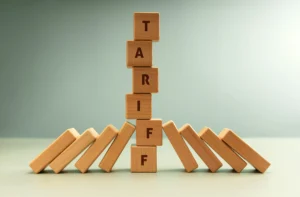
- President Trump’s announcement of a 25% tariff on nations trading with Iran has ignited a wave of uncertainty across global trade and forex markets, triggering fresh volatility.
- The move comes amid Iran’s largest anti-government protests in decades, compounding geopolitical risks and prompting a sharp forex market reaction as traders shift toward safe-haven currencies.
- The tariff impact on forex extends beyond immediate trade disruptions—it influences inflation expectations, monetary policy outlooks, and cross-border capital flows.
- The currency volatility in 2026 is increasingly being driven by political headlines rather than economic data, reshaping trading strategies across major and emerging market currencies.
- Traders should watch the U.S. dollar, Japanese yen, Chinese yuan, and Indian rupee closely as they react to global trade tariffs and policy uncertainty.
- Maintaining a disciplined risk management approach, hedging exposures, and monitoring real-time geopolitical updates will be crucial for navigating markets this quarter.
Tariffs Return to the Global Stage: Why the World Is Watching
The global trading community entered 2026 with cautious optimism. After years of economic rebuilding post-pandemic, there was an expectation that monetary stability and supply chain normalisation would help reduce volatility. That stability was short-lived. On January 12, 2026, U.S. President Donald Trump announced a sweeping 25% tariff on any country conducting business with Iran, immediately shaking confidence in the global trade system and triggering significant movements in the foreign exchange market.
This bold move, made through a social media post rather than formal documentation, declared that “any country doing business with the Islamic Republic of Iran will pay a tariff of 25% on any and all business being done with the United States.” Without legal clarification or supporting White House documentation, traders and investors were left uncertain about implementation details.
Iran, which remains one of OPEC’s key oil exporters, sells most of its crude to China, India, Turkey, and the UAE. The new tariff raises questions about how trade relations will shift and how affected countries will respond. For now, the tariff impact on forex is undeniable — currency markets are moving sharply as investors reassess risk exposure.
This development comes as Iran faces its most widespread anti-government protests in decades, with unrest spreading amid economic grievances. The United States has already hinted at potential military and diplomatic actions, deepening uncertainty in an already fragile geopolitical environment.
Global Trade Tariffs and Their Effect on Market Psychology
The psychology behind global trade tariffs often matters as much as the actual policies. Markets tend to react not only to what is implemented but also to what could happen. Sudden policy shocks from the U.S. administration, especially those announced without procedural clarity, immediately influence forex trader sentiment, capital flows, and risk appetite.
When global tariffs are perceived as punitive or politically motivated, traders anticipate three key outcomes:
- A slowdown in global trade volume, particularly across energy and manufacturing sectors.
- A potential rise in import costs, driving inflation concerns across developed economies.
- An increase in currency volatility, as traders reposition portfolios to hedge against economic uncertainty.
These reactions occur quickly, often before official policy details are even published. In the case of the U.S.–Iran trade tariff, currency markets began responding within hours of the announcement; safe-haven assets like the U.S. dollar, Japanese yen, and Swiss franc strengthened, while emerging market currencies experienced downward pressure.
The Tariff Impact on Forex and Currency Volatility 2026
The U.S. Dollar as a Safe-Haven Anchor
The tariff impact on forex this week underscores how quickly global risk sentiment can shift. The U.S. dollar (USD) remains the default safe haven in times of geopolitical uncertainty. Traders seeking shelter from volatility often move capital into dollar-denominated assets, including Treasury bonds, short-term notes, and dollar index funds.
However, the relationship between tariffs and the dollar is complex. While tariffs can initially strengthen the USD, they also introduce inflationary risks that may affect future Federal Reserve policy decisions. If tariffs raise the cost of imported goods, the Fed may be forced to maintain higher rates for longer, thereby supporting the dollar in the short term but weighing on growth prospects over time.
Emerging Market Currencies Under Pressure
For emerging economies such as India, Turkey, and China, the implications of the U.S.–Iran trade tariff are profound. These countries maintain active trade routes with Tehran and are now caught between maintaining regional alliances and avoiding U.S. trade penalties.
The Indian rupee (INR), Chinese yuan (CNY), and Turkish lira (TRY) have shown immediate weakness following the tariff news. The selling pressure reflects fears of disrupted oil supplies, potential secondary sanctions, and reduced export competitiveness.
Long pointers explaining this reaction:
- Many emerging markets rely on imported crude oil from Iran or neighbouring Gulf producers, making them sensitive to trade disruptions and tariff-induced inflation.
- Investors often retreat from emerging market assets when policy uncertainty rises, causing capital outflows and currency depreciation.
- Global investors view U.S. tariffs as precursors to wider trade disputes, prompting them to scale back exposure in frontier and developing markets.
As a result, currency volatility in 2026 has surged in Asia and the Middle East, with liquidity tightening and short-term spreads widening across FX futures.
Global Trade Tensions Ripple Through Major Economies
The reactions from global powerhouses have been cautious but telling. China’s foreign ministry strongly criticised Washington’s unilateral decision, describing it as “illicit” and warning that tariff wars have no winners. Beijing has already hinted at potential retaliatory measures if the tariff disrupts its oil imports from Iran.
Japan and South Korea, both key U.S. allies with renewed trade deals signed last year, have stated that they are “closely monitoring developments.” Tokyo’s Deputy Chief Cabinet Secretary Masanao Ozaki emphasised that Japan would “carefully examine the content and potential impact” before responding.
The uncertainty extends beyond Asia. European exporters worry that escalating trade barriers could trigger supply chain fragmentation, leading to slower growth in euro-linked markets and putting downward pressure on the euro (EUR).
Trending global keywords such as “trade war 2026”, “currency volatility outlook”, “forex market reaction”, and “tariff policy updates” have surged on Google Trends this week, reflecting a renewed focus on macroeconomic policy and FX instability among traders and investors.
Analyst Consensus: Policy Uncertainty, Not Data, Drives the Market
Market strategists from leading institutions are unanimous: policy unpredictability is the dominant driver of forex moves in early 2026. Analysts suggest that traditional economic indicators like GDP or CPI now take a backseat to real-time political news.
- Goldman Sachs analysts observed that “Currency volatility in 2026 is increasingly driven by event risk rather than fundamental weakness.”
- Nomura economists emphasised that “The tariff shock adds another layer of complexity to Asia’s trade outlook.”
- J.P. Morgan’s FX desk noted that “The dollar-yen pair remains a reliable safe-haven trade as global trade tensions escalate.”
This shift toward headline-driven trading has created opportunities for short-term speculators but challenges for long-term investors who rely on macro stability.
The Federal Reserve’s Challenge: Inflation Meets Uncertainty
The Federal Reserve faces a delicate balancing act as global trade tariffs begin to influence domestic inflation. If tariffs raise import costs, consumer prices may climb again, complicating the Fed’s plan to gradually lower rates through 2026.
A higher-for-longer rate scenario would further strengthen the U.S. dollar, tightening liquidity globally and raising funding costs for emerging market borrowers. At the same time, prolonged tariff tensions could slow global trade, reducing demand for U.S. exports and eventually capping the dollar’s upside.
Traders now view the tariff impact on forex as directly tied to Fed policy timing. Any hint of slower rate cuts or renewed inflationary pressure will amplify volatility in key pairs like EUR/USD, USD/JPY, and USD/CNH.
How Traders Can Navigate the Tariff-Driven Market
In this heightened volatility phase, professional traders and portfolio managers are turning to risk-adjusted positioning and tactical strategies. The goal is not just to predict currency direction but to manage exposure efficiently.
Short-Term Traders
- Watch for volatility spikes during White House statements or unexpected foreign policy updates.
- Trade highly liquid pairs such as USD/JPY, EUR/USD, and GBP/USD for tighter spreads.
- Use technical levels, volatility indices (VIX, CVIX), and options to manage sudden swings.
- Combine macro headlines with algorithmic alerts to capture intraday trends efficiently.
Long-Term Investors
- Focus on diversification across stable currencies like USD, CHF, and JPY.
- Maintain hedges using FX forwards or options against emerging market exposure.
- Track macro data on inflation, oil prices, and central bank comments to gauge tariff pass-through effects.
Commodity Traders
- Monitor oil-linked currencies such as the Canadian dollar (CAD) and Norwegian krone (NOK) for secondary effects of tighter supply.
- Track OPEC production statements closely, as Iranian export restrictions could drive commodity-linked volatility.
- Align commodity positioning with forex market reaction patterns for better timing accuracy.
Broader Economic Implications and Geopolitical Outlook
The global economic structure is becoming increasingly fragmented as nations align their trade policies with political alliances rather than pure market logic. The U.S.–Iran trade tariff is just the latest flashpoint in a wider geopolitical contest where economics and diplomacy overlap.
If extended, these tariffs could accelerate:
- Currency realignments, where nations diversify reserves away from USD dependence.
- Regional trade blocs, seeking to bypass tariff exposure through local agreements.
- Commodity volatility, as oil and gas exporters recalibrate shipments toward neutral countries.
The long-term tariff impact on forex will depend on how coordinated global policy responses become. A unified diplomatic resolution could stabilise markets; continued unilateral actions could cement a new era of policy-driven volatility.
Conclusion: Adapting to an Era of Policy Volatility
The 2026 market narrative is shifting from central bank cycles to geopolitical policy shocks. The tariff impact on forex is a clear reminder that even in an age of advanced trading systems, political decisions still have the power to move markets overnight.
Currency volatility in 2026 will remain elevated as traders price in not just the impact of tariffs but also the broader uncertainty around enforcement, global reactions, and inflationary spillovers.
For traders and investors, the strategy ahead is simple yet essential:
- Stay data-aware but event-driven.
- Use risk management tools proactively.
- Keep diversified across currencies and timeframes.
- Follow policy signals—not just economic indicators.
As the dust settles on Trump’s U.S.–Iran trade tariff, the message for global traders is clear: in this era of global trade tariffs, adaptability and vigilance will define success in the forex markets.
Read here to learn more about “2026 IPO Wave: Could This Be a Record-Breaking Year“

I’m Chaitali Sethi, a financial writer and market strategist focused on Forex trading, market behaviour, and trader psychology. I simplify complex market movements into clear, practical insights that help traders make better decisions and build a stronger trading mindset.