
The concept of U.S. dollar strength represents far more than just a measure of currency performance. It is the reflection of global confidence, economic power, and the ability of the United States to influence every major market through monetary policy and financial stability. In 2025, the dollar remains the world’s most trusted currency, shaping everything from global trade flows and commodity pricing to capital allocation and investment sentiment.
When the dollar gains strength, it creates ripple effects across continents. Importers, exporters, and central banks feel its presence as it alters the cost of borrowing, shifts inflation expectations, and defines the rhythm of global liquidity. For investors, a strong dollar often signals safety and opportunity, while for emerging economies it can bring both challenges and adjustments in trade and debt management.
U.S. dollar strength is not driven by a single factor but by an intricate combination of interest rate policies, fiscal stability, geopolitical conditions, and market psychology. It mirrors how the world perceives the health of the American economy and its financial leadership. As the world moves closer to 2026, the dollar’s direction will once again test the resilience of global markets. Traders, economists, and policymakers are watching closely to determine whether the dollar’s current dominance will continue or begin to moderate as new macroeconomic forces emerge.
Understanding U.S. dollar strength is essential for anyone navigating international markets today. It stands as the heartbeat of the global financial system, setting the tone for trade, growth, and risk across every major economy.
Understanding U.S. Dollar Strength in Today’s Context
‘U.S. Dollar Strength’ refers to the relative performance of the U.S. dollar against other global currencies. Measured by the U.S. Dollar Index (DXY), it reflects how global investors value U.S. assets compared to alternatives in Europe, Japan, or emerging markets.
The dollar’s strength is a function of confidence—not only in the U.S. economy but also in its governance, debt stability, and capacity to generate returns. When the world grows uncertain, investors seek safety in the dollar, pushing it higher.
During 2025, the DXY has hovered between 102 and 108, reflecting both resilience and restraint. While the Fed’s tightening cycle has slowed, the greenback remains strong due to geopolitical instability, diverging growth rates, and risk aversion.
The dollar’s global influence is unmatched. Nearly 88% of all global forex transactions involve the dollar. Over 60% of central bank reserves are held in dollars. Oil, gold, and most industrial commodities are still priced in dollars. This dominance amplifies how even small fluctuations in the U.S. dollar strength reshape trade, debt, and inflation across the world.
For traders, that means every position — from equities to metals — indirectly depends on dollar sentiment.

Historical Lessons: What Past Dollar Cycles Reveal
The U.S. dollar operates in cycles tied to interest-rate differentials, policy divergence, and investor psychology. Understanding these historical phases gives traders critical context for 2026.
- 1980s: The dollar soared after aggressive rate hikes under Paul Volcker. It curbed inflation but triggered global debt crises in Latin America.
- 2000–2008: Strong growth and a tech boom supported a firm dollar, but financial imbalances later fuelled a sharp decline before the global financial crisis.
- 2014–2016: Dollar rallies resumed as the Fed ended quantitative easing and raised rates while Europe and Japan pursued negative-yield policies.
- 2020–2022: The pandemic crash briefly weakened the dollar, but it rebounded sharply as the Fed embarked on one of the fastest tightening cycles in history.
By comparing these cycles, traders see a pattern: the dollar strengthens when global uncertainty rises and weakens when synchronised growth returns. This pattern remains relevant as we move toward 2026, where diverging growth rates and evolving trade blocs may again redefine currency leadership.
Key Forces Driving U.S. Dollar Strength in 2025–2026
Multiple macroeconomic levers currently shape U.S. dollar strength, creating both bullish and bearish forces that interact continuously. These drivers not only define short-term volatility but also determine whether the dollar sustains its dominance or moderates as 2026 unfolds.
1. Federal Reserve Policy Outlook
Interest rates remain the single biggest driver of the dollar’s global direction. The Federal Reserve’s cautious tone in 2025 reflects its effort to balance inflation control with economic stability. By keeping policy moderately restrictive, the Fed signals confidence in the economy while discouraging excessive speculation.
If rates remain elevated for longer than expected, the yield advantage of U.S. assets over global peers could persist. That scenario would continue attracting international investors, thereby strengthening the dollar well into 2026. Higher real yields, particularly in Treasuries, often create a steady pipeline of capital inflows from pension funds, sovereign investors, and institutions seeking safety with returns.
However, traders must also consider the risk of policy miscalibration. If the Fed pivots too early, easing before inflation stabilises, the dollar may lose support as yields compress. Conversely, if tightening resumes unexpectedly, capital could flood back into dollar assets, driving another wave of appreciation. Each policy announcement therefore acts as a potential catalyst for volatility in U.S. dollar strength.
2. Global Economic Divergence
The divergence between the U.S. economy and the rest of the world remains one of the defining factors behind dollar resilience. While the U.S. continues to display steady growth and low unemployment, several advanced economies — particularly in Europe and Japan — face structural stagnation and weak consumer demand.
This performance gap encourages investors to reallocate portfolios toward American markets, seeking stronger returns and currency stability. A vibrant labour market and a leading technology sector further support investor confidence in the dollar’s outlook. In contrast, slower economies abroad struggle to attract capital, leading to depreciating currencies and reduced competitiveness.
Emerging markets are also feeling the strain of this imbalance. Many developing economies rely on foreign borrowing, much of which is denominated in dollars. When U.S. dollar strength rises, their repayment burdens increase, tightening financial conditions. Until global growth becomes more balanced, this divergence will remain a structural tailwind keeping the dollar firm through 2026.
3. Fiscal Imbalances and Debt Confidence
The United States’ growing fiscal deficit and total debt — now exceeding 120% of GDP — might seem like a vulnerability. Yet paradoxically, this fiscal expansion often supports the dollar’s strength. The U.S. Treasury market remains the largest and most trusted safe-haven asset class, offering unmatched liquidity and credibility.
During uncertain periods, global investors continue to seek U.S. Treasuries for security, even as borrowing costs rise. Central banks, insurance companies, and sovereign wealth funds depend on these instruments for portfolio stability, indirectly increasing demand for dollars.
That said, this dependence is not without limits. If fiscal expansion continues unchecked or political gridlock undermines confidence, long-term credibility could come under pressure. However, for now, the combination of liquidity depth, legal stability, and global demand for U.S. assets keeps U.S. dollar strength supported despite record-high debt levels.
4. Energy and Commodity Cycles
Energy markets remain closely tied to dollar movements because nearly all major commodities — oil, gas, and metals — are priced in U.S. dollars. When global energy prices rise, countries dependent on imports must sell local currencies to buy dollars for settlement. This creates natural and sustained demand for the greenback.
The 2022–2023 energy surge provided a clear example. As crude oil climbed above $100 per barrel, the dollar index strengthened sharply, fuelled by higher trade-related dollar flows. By contrast, when oil and copper prices stabilised in 2024 and early 2025, the dollar’s momentum eased.
Going into 2026, commodity volatility may once again play a decisive role. Any renewed supply shock — from OPEC production cuts, geopolitical conflict, or climate-driven disruptions — could reignite demand for dollars. Conversely, if energy prices stay low, emerging-market currencies may regain strength, slightly reducing the dollar’s global grip.
5. Risk Sentiment and Geopolitical Uncertainty
The dollar’s reputation as the world’s safest currency ensures it strengthens whenever fear enters global markets. Wars, sanctions, political instability, or financial crises consistently drive investors toward U.S. assets. This flight-to-safety dynamic gives the dollar an enduring defensive premium.
Events such as the Russia-Ukraine war, trade tensions between the U.S. and China, and instability in the Middle East have all reaffirmed this behaviour. When uncertainty rises, capital exits riskier regions and flows into U.S. Treasuries and money markets, boosting the dollar’s value.
Even in periods of domestic political division or market volatility, global investors continue to see the dollar as the anchor of trust and liquidity. In 2026, any escalation of geopolitical risks — from energy route blockages to sanctions or regional conflicts — could again trigger a surge in U.S. dollar strength.
The Combined Impact of These Forces
Each of these forces—monetary policy, growth divergence, fiscal dynamics, commodities, and geopolitics—contributes to the dollar’s global dominance in distinct ways.
- Short-term strength comes from interest rate expectations and shifts in risk sentiment.
- Medium-term stability is supported by trade-related demand and fiscal trust.
- Long-term influence rests on the U.S. economy’s ability to maintain innovation, productivity, and financial credibility.
When these forces align, the dollar often rallies sharply. When they conflict — such as during synchronised growth or easing monetary policy — corrections follow.
Heading into 2026, the interplay among these elements will define whether the dollar maintains its current resilience or transitions toward a softer, more balanced phase. For traders, recognising how these forces evolve together is essential for anticipating turning points in U.S. dollar strength and positioning accordingly.
Strong Dollar vs Weak Dollar Effects on the World Economy
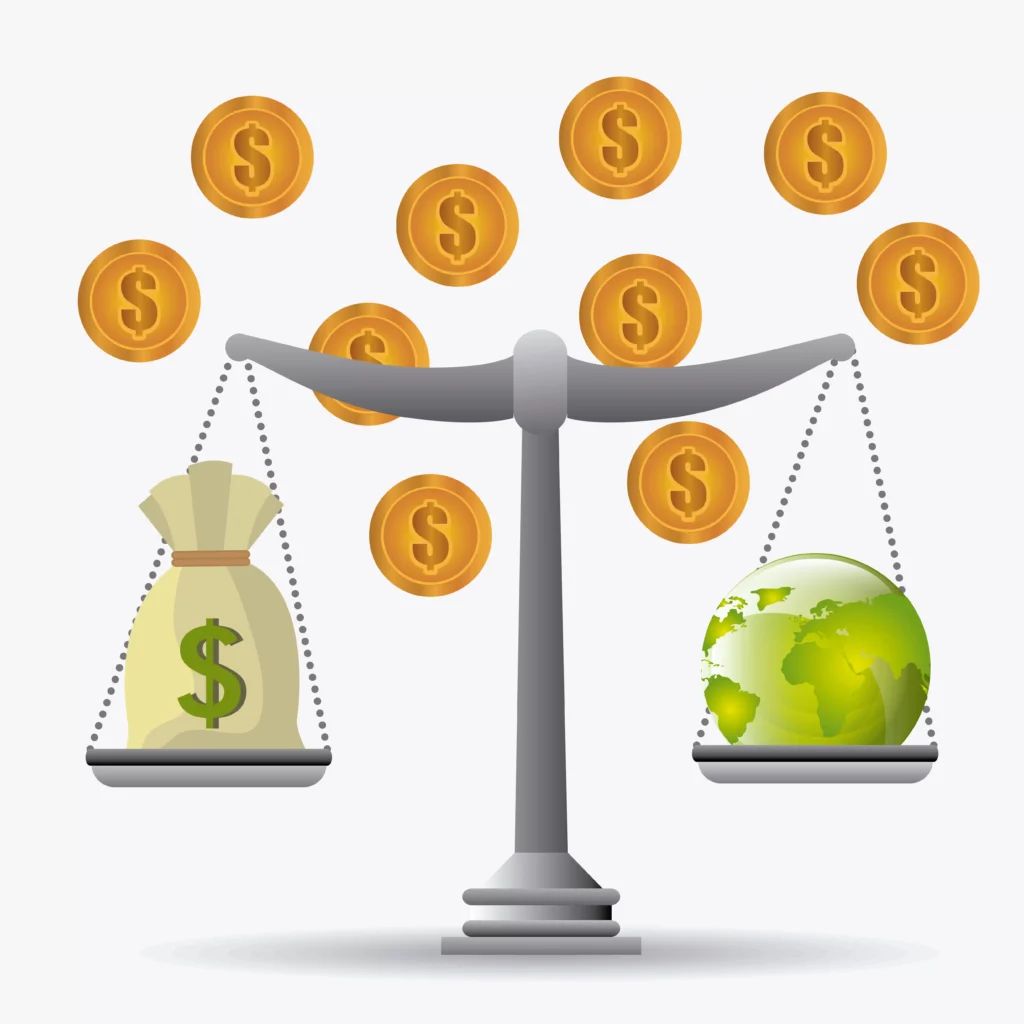
The distinction between a strong dollar and a weak one defines global winners and losers.
A Strong Dollar Scenario
- Imports Become Cheaper: U.S. consumers enjoy lower costs for foreign goods, helping reduce domestic inflation.
- Exports Lose Competitiveness: American products become expensive overseas, widening the trade deficit.
- Debt Stress Rises: Emerging markets holding dollar-denominated debt face repayment burdens as their local currencies weaken.
- Commodities Decline: Oil and metals often fall when the dollar rises, as foreign demand drops.
A Weak Dollar Scenario
- Exports Grow: U.S. manufacturing benefits as goods become more affordable globally.
- Commodities Rally: Investors turn to physical assets like gold and oil as hedges.
- Emerging Markets Recover: Debt relief and capital inflows revive developing economies.
- Inflation Risk Returns: A weaker dollar raises import prices in the U.S., challenging price stability.
Historically, alternating phases of strong and weak dollar cycles have balanced global capital flow. For traders, identifying the transition point between these two regimes often defines profitable entry points.
U.S. Dollar Influence on Global Markets
No currency shapes global market psychology as profoundly as the dollar. Its strength influences asset performance across every region.
In equities, dollar rallies often hurt emerging markets as capital retreats to the U.S. In commodities, a stronger dollar suppresses gold and crude prices because they become more expensive for foreign buyers.
Bond markets react inversely: when the dollar strengthens, U.S. yields tend to climb as global investors demand higher returns to hold Treasuries. Meanwhile, global corporate bonds denominated in dollars experience higher refinancing costs, affecting balance sheets worldwide.
These interactions create a chain reaction:
- Dollar strength raises borrowing costs globally.
- Tighter financial conditions slow trade.
- Slower trade dampens growth expectations.
That is why analysts call the dollar “the world’s thermostat”—its movement determines global liquidity and heat in the financial system.
Currency Value and Trade Balance: A Structural View
The link between currency value and trade balance forms the fundamental equation behind U.S. dollar strength.
When the dollar appreciates, American exporters face declining foreign demand. This widens the U.S. trade deficit and discourages manufacturing. Simultaneously, consumers benefit from cheaper imported goods, reinforcing spending power.
During periods of dollar weakness, exports thrive, narrowing trade deficits but increasing import-driven inflation. For example, between 2017 and 2019, dollar softness helped U.S. export competitiveness, but rising import prices slightly lifted inflation.
Today, the dollar’s strength has widened the trade deficit to over $70 billion monthly. However, global demand for American technology, defence, and energy products continues to offset this imbalance partially.
The challenge for policymakers remains balancing competitiveness with stability—a strong dollar attracts capital but strains trade; a weak dollar boosts exports but risks inflation.
Dollar Fluctuations and Inflation Trends Across Regions
Dollar fluctuations and inflation trends represent one of the most important global relationships in 2025–2026.
In the United States, a firm dollar suppresses import prices and moderates inflation expectations. However, for developing nations, every tick higher in the dollar index translates into higher fuel, food, and industrial costs.
Take 2022 as an example: when the DXY peaked near 114, countries like Sri Lanka, Turkey, and Egypt faced severe inflation shocks. Their import costs soared, and local currencies collapsed under external debt burdens.
In contrast, when the dollar weakened in 2024, inflation in many emerging markets began to ease, and growth rebounded.
This relationship underscores the dollar’s asymmetric power. It acts as an inflation regulator for the U.S. while transmitting volatility to the rest of the world.
Traders must therefore monitor not just domestic data but global inflation cycles that feed back into dollar valuations.
The Fed’s Strategy and the Market’s Reaction
The Federal Reserve remains the anchor of U.S. dollar strength. In 2025, the central bank finds itself in a pivotal position — inflation is falling but not yet stable, growth is slowing but not collapsing, and political pressure to manage debt service costs is rising.
If the Fed signals rate cuts too soon, the dollar could weaken sharply. However, if it maintains a restrictive policy to prevent another inflation wave, global liquidity may tighten again.
For traders, Fed communication is as important as actual rate moves. Forward guidance often moves markets before data does. Tools like the CME FedWatch and bond yield spreads help anticipate how policy expectations align with U.S. dollar strength trends.
Global Energy Markets and the Dollar Connection
Energy remains the most dollar-sensitive sector of all. Oil, natural gas, and coal trade primarily in dollars, creating a feedback loop between commodity pricing and currency movements.
When U.S. dollar strength increases, oil prices usually decline as foreign buyers reduce purchases. In 2022, for example, the dollar’s surge coincided with Brent crude dropping nearly 20% in three months.
By contrast, when the dollar softened in late 2024, oil and gold rallied again, reflecting renewed global demand.
This cycle matters for inflation management too. Cheaper oil helps cool inflation but weakens energy-exporting economies like Saudi Arabia and Russia. A stronger dollar thus redistributes wealth across regions — a quiet but powerful global mechanism.
Geopolitical Realignment and De-Dollarisation Trends
In recent years, talk of de-dollarisation — the idea that nations might move away from the dollar for trade settlement — has gained attention. BRICS countries have discussed creating alternative payment mechanisms. China and Russia now trade more in local currencies.
However, despite these headlines, U.S. dollar strength remains unshaken. The dollar’s liquidity, trust, and integration with global finance give it an advantage no rival currency currently matches.
While diversification may continue, it will likely be marginal. Even a 5% reduction in dollar-based trade over the next five years would not undermine its dominance in the near term.
Thus, while geopolitical shifts create headlines, they have yet to change the dollar’s structural supremacy.
USD Prediction 2026: Will the Dollar Go Up or Down?
As the year 2026 approaches, the critical question resurfaces: will the dollar rise or fall next year1?
Current forecasts suggest a controlled moderation rather than a collapse or resurgence.
Scenario 1: Gradual Weakness (Base Case)
- The Fed begins small rate cuts by mid-2026.
- Inflation continues to fall globally, reducing demand for defensive assets.
- U.S. Dollar Strength softens slightly as investors reallocate to emerging markets.
- The DXY could settle near 99–101 by the end of 2026.
Scenario 2: Extended Strength (Risk Scenario)
- Escalating geopolitical tensions revive safe-haven flows.
- China’s slowdown deepens, drawing global capital toward U.S. assets again.
- Dollar strength persists above 106, keeping pressure on global trade.
Scenario 3: Rapid Decline (Low Probability)
- Aggressive rate cuts and fiscal overspending weaken investor confidence.
- Gold and commodities rally sharply as the dollar drops below 98.
- This scenario could benefit commodity and EM traders but harm bondholders.
Based on consensus, moderate weakness appears most probable. The dollar is unlikely to collapse because its structural demand — reserve use, global invoicing, and trade finance — remains intact.
Practical Strategies for Traders and Investors
To navigate changing U.S. dollar strength, traders should adopt structured approaches:
- Use Multi-Timeframe Analysis: Track long-term DXY trends alongside short-term chart patterns.
- Monitor Inflation Differentials: Compare U.S. CPI against EU and Japan to forecast rate divergence.
- Correlate with Gold and Oil: Gold tends to rise when the dollar weakens; oil follows similar patterns.
- Diversify Currency Exposure: Pair dollar trades with currencies showing clear momentum, like AUD, CAD, or SGD.
- Stay Macro-Informed: Regularly track FOMC meetings, IMF forecasts, and trade balance data.
Such proactive monitoring transforms speculation into strategic positioning — the hallmark of disciplined trading.
Real-World Examples: Dollar Cycles in Action
Let’s consider recent market cycles to illustrate how traders capitalise on U.S. dollar strength transitions:
- 2022: The dollar surged as the Fed tightened aggressively. Traders shorted EUR/USD successfully as the euro fell to parity.
- 2023: Rate plateau expectations caused sideways moves; swing traders profited from volatility within a range.
- 2024: Softening CPI data weakened the dollar slightly. Gold and GBP/USD rallied, offering long-side opportunities.
- 2025: Renewed risk aversion from global tensions revived dollar bids, favouring USD/JPY carry trades.
Each phase rewarded those who combined macro awareness with timing precision — a vital edge as 2026 approaches.
Cross-Asset Implications of Dollar Movements
The dollar doesn’t act in isolation. Its movements ripple across multiple asset classes:
- Bonds: A strong dollar often coincides with rising yields and tighter global liquidity.
- Equities: U.S. stocks outperform during dollar rallies; emerging markets thrive during dollar weakness.
- Commodities: Gold, silver, and crude oil react inversely to dollar moves.
- Crypto Assets: Bitcoin tends to rally when the dollar weakens, reflecting risk-on sentiment.
Traders who understand these interconnections can build diversified setups that thrive in both phases of dollar movement.

Conclusion
The U.S. dollar’s strength defines the global economic order. Every change in its value adjusts trade balances, inflation trends, and investment decisions worldwide.
As 2026 approaches, the question “Will the dollar go up?” remains crucial but nuanced. The answer lies not in a single metric but in the interplay of monetary policy, risk appetite, and structural demand.
The base case points toward gradual dollar softness amid easing Fed policy. Yet, resilience remains likely, supported by geopolitical uncertainty and persistent global reliance on the U.S. financial system.
For traders, this environment calls for adaptability — blending macro fundamentals, technical timing, and emotional discipline. The dollar may not always rise, but its dominance ensures that understanding its cycles will always pay dividends.
The dollar’s next chapter will not be defined by extremes but by evolution—slower, steadier, and more strategic than before.
FAQs
1. What will determine U.S. dollar strength in 2026?
Interest rate policy, inflation control, and global capital flows will remain the primary factors shaping the dollar’s path.
2. How do strong dollar vs weak dollar effects influence inflation?
A strong dollar reduces inflation in the U.S. but raises it abroad; a weak dollar does the opposite.
3. What role do currency value and trade balance play?
Trade balance shifts directly reflect how currency value impacts exports, imports, and domestic production.
4. What are dollar fluctuations and inflation trends indicating for traders?
Current trends show moderated volatility but persistent inflation differentials — key for positioning currency pairs.
5. Will the dollar go up in 2026 or decline?
Most analysts expect mild weakness through 2026 as policy divergence narrows, though safe-haven flows may offset sharp declines.
Read here to learn more about “Trading Consistency Challenges Every Trader Faces in 2026“

I’m Chaitali Sethi, a financial writer and market strategist focused on Forex trading, market behaviour, and trader psychology. I simplify complex market movements into clear, practical insights that help traders make better decisions and build a stronger trading mindset.