
Found this useful? Share it! 👆
⏱️ 12 min read · 💬 Join 5,000+ traders
what is forex trading – 📋 In This Article
Vinit Makol shows every trade live — wins AND losses.
No hiding. No gurus. Just real forex.
Join us →
Listen.
I’m about to tell you something that’s gonna piss off every forex guru on YouTube.
What is forex trading? However, it’s not your ticket to quitting your job in 30 days. It’s not some magical money printer. And it’s definitely not the “easy” path to wealth that Instagram traders want you to believe.
Here’s the thing – forex trading is the simultaneous buying of one currency while selling another, which means you’re betting on the relative strength between two economies. That’s it. However, the way most people approach it is completely backwards, and that’s exactly why they lose money.
I’ve been trading for 15+ years. In fact, real talk, I’ve blown accounts. I’ve taken a $3,400 loss on a single trade because I got cocky. But I’ve also built a system that targets 5% monthly returns with radical transparency, because I’m sick of the BS in this industry.
Here’s What Most Traders Miss
Quick Answer: Forex trading is the buying and selling of currency pairs in the world’s largest financial market ($7.5 trillion daily volume). Traders profit from exchange rate fluctuations between currencies like EUR/USD or GBP/JPY, operating 24 hours a day, 5 days a week across global markets.
Right now, as you’re reading this, there are 5,000+ traders in our Telegram channel watching live trades happen in real-time. Not fake screenshots. As a result, not “trust me bro” claims. Actual positions with entry, stop loss, and take profit levels.
Because of this approach, we’ve built something different at Edge-Forex.
What Is Forex Trading Actually?
Okay, let’s break this down like you’re sitting across from me at a coffee shop.
Forex stands for “foreign exchange.” Basically, it’s where currencies get traded. Meanwhile, when you go on vacation and exchange dollars for euros? That’s a forex transaction. But we’re doing it to make money, not to buy overpriced croissants in Paris.
The forex market is MASSIVE. I mean stupid big.
$7.5 Trillion
Average daily trading volume in the forex market – that’s 30x larger than all US stock markets combined
To put it simply, nothing else comes close. Not stocks. Not crypto. However, not real estate. Meanwhile, this market operates 24 hours a day during the work week, which means you can trade around your schedule instead of being glued to your screen during specific hours.

Here’s how it actually works. You’re always trading in pairs. Always. You can’t just “buy euros” – you have to sell something else to get them. So you trade EUR/USD, which means you’re either:
Let’s Break This Down
Buying euros while selling dollars (going long), or…
Selling euros while buying dollars (going short).
Sound familiar? Yeah. What’s more, look, BabyPips has a solid breakdown of currency pairs if you want the textbook version. But I’m gonna give you the stuff they don’t talk about.
The controversial take nobody wants to say out loud: Most beginner forex content is designed to get you trading as fast as possible so brokers can collect spreads from your inevitable losses. That’s the business model. However, if you approach this like a actual business with proper risk management, the odds shift dramatically in your favor.
How Forex Trading Works (The Real Version)
Let me paint you a picture.
It’s 2:47am on a Tuesday. I’m watching GBP/USD because the UK just released inflation data that came in hotter than expected. In fact, the pair jumped 40 pips in about 90 seconds. My RSI divergence setup that I’d been tracking for three days just triggered.
That’s forex.
You’re not trading companies. You’re trading the economic strength, political stability, interest rate differentials, and market sentiment of entire countries against each other. What’s more, you’re using leverage to control larger positions than your account balance would normally allow.
Here’s the deal with leverage – it’s both the best and worst thing about forex.
Let’s say you have $1,000 in your account. With 50:1 leverage (pretty standard), you can control a $50,000 position. So a 1% move in the currency pair equals a $500 gain or loss on your $1,000. See the problem? On top of that, most new traders see the profit potential and completely ignore the risk side.
“Leverage is like a chainsaw – incredibly useful in the right hands, absolutely devastating if you don’t know what you’re doing.”
– Vinit Makol
According to Investopedia’s forex overview, the market operates through a global network of banks, brokers, and financial institutions. There’s no centralized exchange like with stocks. As a result, prices can vary slightly between brokers, although the differences are usually minimal.
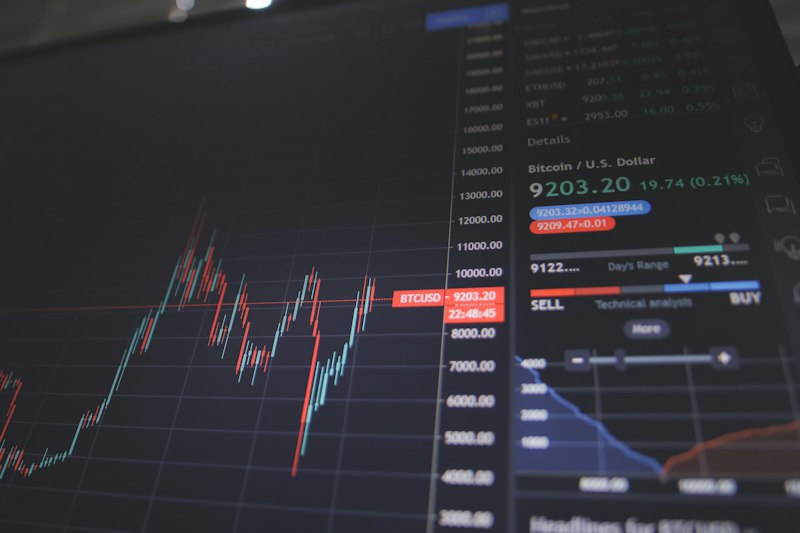
The major currency pairs you’ll hear about are:

And This Is Where It Gets Real
EUR/USD (Euro/US Dollar) – the most traded pair, period. GBP/USD (British Pound/US Dollar) – my personal favorite for volatility. USD/JPY (US Dollar/Japanese Yen) – moves beautifully on risk sentiment. Meanwhile, there are dozens of other pairs, but honestly? Stick to the majors until you actually know what you’re doing.
At Edge-Forex, we focus primarily on a handful of pairs because mastery beats mediocrity every single time. I’d rather be exceptional at trading three pairs than mediocre at trading twenty.
Why 90% of Traders Actually Fail
Okay, real talk time.
Everyone quotes the statistic that 70-90% of retail forex traders lose money. But nobody explains WHY, or more importantly, how to be in the 10% that doesn’t.
I was about to – actually, let me back up a second.
When I started trading 15 years ago, I did everything wrong. Overleveraged positions. No stop losses because “I knew” the trade would come back. Revenge trading after losses. Trading based on feelings instead of setups. Basically, I was a walking checklist of what NOT to do.
90%
Percentage of retail forex traders who lose money within their first year
Here’s what kills most traders, and this is stuff the gurus won’t tell you because it doesn’t sell courses:
No actual edge. They’re trading based on YouTube videos and gut feelings. That’s not a strategy. More importantly, they have no way to measure if their approach even works because they’re changing it every other week.
Terrible risk management. Risking 10% or 20% per trade because they wanna get rich quick. Then one bad day wipes out weeks of gains. However, the math is brutal – lose 50% of your account and you need a 100% return just to break even.
Emotional chaos. Honestly though, this is the biggest one. They take a loss and immediately jump into another trade to “make it back.” They hit a winner and suddenly they’re invincible so they double their position size. In other words, they’re gambling, not trading.
The Part Nobody Talks About
No accountability. They hide their losses and only talk about wins. As long as nobody’s watching, it’s easy to lie to yourself about your results. That said, radical transparency changes everything, which is exactly why we show ALL our trades at Edge-Forex.
The Bank for International Settlements publishes data on forex market structure, and the institutional players are on the other side of your trades. They have algorithms, teams of analysts, and unlimited capital. But here’s the thing – they also have weaknesses, and that’s where setups like RSI divergence come in.

Listen, I’m not gonna sugarcoat it. Trading is hard. That said, but it’s not complicated if you have a system and you stick to it. For example, our Road to a Million challenge is built on one simple premise: consistent, boring, repeatable profits. Not home runs. Not lottery tickets. Just 5% monthly returns compounded over time.
That’s the secret the gurus don’t want you to know – boring wins.
Jump into our Telegram right now and you’ll see exactly what I mean. Real traders. Real trades. Meanwhile, real transparency.
Getting Started the Right Way
So you wanna actually do this thing? Cool. Let me save you about three years of pain.
First, education. And I don’t mean buying a $2,000 course from some dude flexing rented Lambos. Start with the free stuff that’s actually good. Forex Factory has years of forum discussions from real traders. Read them. Meanwhile, DailyFX education section covers fundamentals without trying to sell you snake oil every paragraph.
Second, demo trading. But not the way most people do it.
Demo trading isn’t about “practicing” – it’s about proving your strategy works BEFORE you risk real money. In fact, if you can’t make consistent profits on a demo account, you have absolutely no business trading real money. Because of this, I tell everyone to demo trade for at least three months with proper position sizing.
Treat that demo money like it’s real. Track every trade. Calculate your win rate, your average win versus average loss, your maximum drawdown. Interestingly, most people skip this part and jump straight to live trading, then wonder why they blow up their account in week two.
Third, start small when you go live. Like stupidly small.
Your first live trades should be micro lots with money you can genuinely afford to lose. That’s not me being dramatic – that’s reality. Even though you crushed it on demo, live trading hits different psychologically. On top of that, you need to experience what it feels like to have real money on the line while keeping your emotions in check.
Real Talk – What Actually Happens
Here’s what your checklist should look like:
✓ Found a regulated broker (seriously, don’t skip this)
✓ Understand pip values and lot sizes
✓ Have a tested strategy with documented results
✓ Know your risk per trade (should be 1-2% max)
✓ Set up a trading journal to track everything
At the same time, understand that your goal isn’t to make money right away. Your goal is to NOT LOSE money while you learn to execute your system consistently. The profits come later, as long as you survive the learning curve.
Genuinely, the biggest mistake I see is people rushing this process. They see someone posting profits on social media and think “I need to do that NOW.” But what you don’t see is the years of work behind those results. What’s more, you don’t see all the losing trades, because most people conveniently forget to post those.
The Edge-Forex Approach to Forex Trading
Look, I’m gonna be straight with you about what we do at Edge-Forex.
We’re not gonna promise you’ll quit your job in 90 days. We’re not gonna show you photoshopped account statements. And we’re definitely not gonna pretend every trade is a winner, because that’s complete nonsense.
What we DO is show you every single trade, live, as it happens. Wins. Losses. Break-evens. The whole thing. However, this level of transparency is rare in forex, which is exactly why we do it. Because the industry is full of scammers and I’m tired of it.
Our core strategy revolves around RSI divergence setups. To put it simply, we’re looking for moments when price action and momentum indicators disagree, which often signals a reversal is coming. That said, we don’t just blindly trade divergence – we combine it with proper support/resistance levels, trend analysis, and risk management.
The Road to a Million challenge documents every step of growing a small account through consistent returns. Not gambling. Not martingale nonsense. Just proper position sizing and letting winners run while cutting losers quickly. As a result, we target around 5% monthly returns, which sounds boring until you compound it over time.
Tbh, 5% per month would turn $10,000 into over $18,000 in a year. Then $32,000 the next year. Then $58,000. You see where this goes? Meanwhile, everyone else is chasing 100% monthly returns and blowing up accounts every quarter.
The difference is sustainability.

Now Here’s the Kicker
Right now, literally as you’re reading this, there are trades being posted in our Telegram channel. Not after the fact. Not cherry-picked winners. Real-time analysis with entry prices, stop losses, and profit targets. Because that’s what actual transparency looks like.
And honestly? That’s the Edge-Forex difference. No BS. No hidden losses. Just the raw truth about what works and what doesn’t in this market.
Whether you join us or not, please – PLEASE – don’t fall for the get-rich-quick garbage. Learn the fundamentals. Respect the market. Manage your risk. Because this game is survivable if you’re smart about it, although it’ll eat you alive if you’re reckless.
So what is forex trading? Interestingly, it’s a legitimate way to build wealth if you treat it like a business instead of a lottery ticket. It’s the world’s largest market, operating 24/5, with enough liquidity that your small account will never move prices. But it’s also unforgiving to those who don’t respect it.
After 15 years in this game, I can tell you the traders who make it are the ones who stay boring, stay consistent, and stay humble. Right?
Now stop reading and come watch some live trades. We’re probably in a position right now.
See you in the Telegram. ✌️
Free Download: RSI Divergence Cheat Sheet
The exact RSI setup Vinit uses to find high-probability trades. One page. Print it. Use it daily.
🔔
Never Miss a Live Trade Setup
5,000+ traders are watching Vinit’s live trades RIGHT NOW.
Stop missing out — join free on Telegram.
No spam. No $5,000 courses. Just real transparent trading.
💡 Found this useful? Share it with a trader who needs to read this.